
Best overall: a stainless steel 12-piece cookware set. Best for easy food release: a traditional nonstick set. Best for shoppers who specifically want a ceramic cooking surface: a ceramic-coated set. This 2026 guide ranks these cookware types—not individual models—and explains how to choose a set you will actually use.
- The best 12 piece cookware sets match your stove, everyday meals, and cabinet space—not just a piece count.
- Choose stainless steel cookware for browning and flexible everyday cooking; expect more attention to heat and food release.
- Choose traditional nonstick cookware for easy food release, but follow its coating-care and heat instructions.
- Choose ceramic-coated cookware for that surface preference, not an assumed health benefit.
Vanitywalker brings beauty and home products together in one store. For cookware shopping, keep the decision practical: choose the pans first, then check the extras.
Why this matters
A 12-piece cookware set does not necessarily contain 12 pots and pans. Lids and accessories can count toward the total, so the headline number alone does not tell you how much cooking equipment you get.
For your 2026 kitchen checklist, start with the meals you repeat. Eggs, pasta, soups, and browned chicken put different demands on a pan; a coordinated set only helps when its contents match those jobs.
Count the cooking vessels separately from everything else. A useful assortment beats a larger-looking bundle filled with pieces you already own.
What makes the best 12 piece cookware sets
Use these criteria before comparing finishes or matching handles:
- Useful contents: Identify every skillet, saucepan, sauté pan, and larger pot. Count lids and utensils separately.
- Stove fit: Confirm compatibility with your exact cooktop. Induction requires a suitable magnetic base; a material name alone is not enough.
- Cooking surface: Choose stainless steel for browning flexibility or a coated surface when easy food release matters more.
- Practical sizes: Check diameter and capacity, not just product photos. As examples, a 10-inch skillet and a 3-quart saucepan serve different jobs from a larger frying pan or stockpot.
- Care requirements: Read the instructions for heat, utensils, washing, oven use, and storage. Each component can have different limits.
- Storage fit: Check handle clearance, lid storage, and whether stacking requires protection between cooking surfaces.
A 12-inch skillet is another useful size to compare when your meals need more cooking area. These measurements are shopping examples, not specifications for a particular set or a requirement to buy every size.
Cookware types at a glance
The ranking below compares material choices. The exact construction, contents, and care instructions still determine whether an individual set deserves a place in your kitchen.
| Ranked cookware type | Best for | Standout benefit | Key limitation |
|---|---|---|---|
| Stainless steel 12-piece set | Everyday cooking with browning and pan sauces | Uncoated cooking surface | Food release requires heat management and technique |
| Traditional nonstick 12-piece set | Eggs, pancakes, and delicate foods | Easy food release | Coating care restricts utensils, heat, and cleaning methods |
| Ceramic-coated 12-piece set | Shoppers who specifically prefer ceramic coatings | Nonstick-style cooking surface | The coating still needs careful handling |
Do not treat these categories as guarantees of quality. Two stainless steel sets can have different construction, and two coated sets can carry different use instructions.
1. Stainless steel: best cookware set for everyday versatility
A stainless steel cookware set is the strongest default when you want to brown food, simmer sauces, and build a practical collection around an uncoated surface. Stainless steel is not naturally nonstick, so you need to learn how the pan responds to heat and when food is ready to release.
Best for: Home cooks who want one main set for varied meals and accept a learning curve.
Stainless steel pros
- An uncoated surface avoids the need to preserve a nonstick coating.
- Browning leaves flavorful bits you can loosen with liquid for a pan sauce.
- The same material category covers skillets, saucepans, and larger pots for different cooking tasks.
Stainless steel cons
- Eggs and delicate foods require more attention to temperature, fat, and timing.
- Stuck-on food can require soaking or additional cleaning.
- The words stainless steel do not establish induction compatibility, heat distribution, or oven limits.
What to check before choosing stainless steel
Look for a clear explanation of the pan's construction. Stainless steel cookware often incorporates another metal, such as aluminum, to help conduct heat; the listing should explain where that material sits rather than relying on a vague construction claim.
Then inspect the assortment. A useful frying pan, a saucepan for smaller jobs, and a pot that suits your larger meals matter more than several nearly identical pieces.
For a 2026 purchase, verify the instructions for the exact set rather than borrowing specifications from another set by the same manufacturer. Handles, lids, and construction can differ.
Verdict: Buy stainless steel as your default when versatile cooking matters more than effortless food release.
2. Traditional nonstick: best cookware set for easy food release
Traditional nonstick cookware uses a coating designed to reduce food sticking to the cooking surface. It is a practical choice when eggs, pancakes, and other delicate foods dominate your routine, provided you follow the manufacturer's heat and care instructions.
Best for: Everyday cooks who prioritize easy release and are comfortable treating coated cookware gently.
Traditional nonstick pros
- The cooking surface helps delicate foods release.
- Less stuck-on food can make routine cleanup simpler.
- A coordinated set provides the same general surface type across several cooking vessels.
Traditional nonstick cons
- Abrasive cleaning and unsuitable utensils can damage the coating.
- High-heat cooking and oven use depend on the exact manufacturer's restrictions.
- An all-nonstick assortment is unnecessary if you only want that surface for a frying pan.
What to check before choosing traditional nonstick
Read the utensil and cleaning instructions before deciding whether the set fits your habits. If you regularly scrape pans with metal tools or use abrasive scrubbers, choose equipment whose instructions allow those practices—or change the routine.
Also ask whether you need coated saucepans and larger pots. If easy release matters mainly for breakfast, an entire coated set might solve a smaller problem than you think.
Do not translate nonstick into maintenance-free. The coating is part of the buying decision, and protecting it is part of ownership.
Verdict: Buy traditional nonstick when easy food release is your main priority; skip a full set if you only need a coated skillet.
3. Ceramic-coated: best cookware set for a ceramic surface preference
Ceramic-coated cookware has a coating over an underlying cookware body. It is not the same thing as a pot made entirely from ceramic, and the word ceramic does not establish the set's cooktop compatibility or permitted heat settings.
Best for: Shoppers who specifically want ceramic-coated cooking surfaces and accept coating-care requirements.
Ceramic-coated pros
- The coating provides a nonstick-style surface for everyday cooking.
- A coordinated set keeps your cooking-surface preference consistent across several pieces.
- It offers a distinct coating option to compare with traditional nonstick.
Ceramic-coated cons
- Ceramic-coated cookware still needs protection from scratching and unsuitable cleaning methods.
- The coating name alone does not establish better durability or a health benefit.
- Oven, dishwasher, and induction suitability remain product-specific.
What to check before choosing ceramic-coated cookware
Read the material description closely enough to distinguish the coating from the pan body. Then check utensil guidance, cleaning instructions, and storage recommendations.
For your 2026 shortlist, treat broad wellness language as separate from useful cookware specifications. A clear contents list and care instructions help you make a decision; an unsupported promise does not.
Compare ceramic-coated sets against traditional nonstick using the same checklist. Do not give either category a free pass on practical details.
Verdict: Buy ceramic-coated cookware for a specific surface preference, not an assumed health or durability advantage.
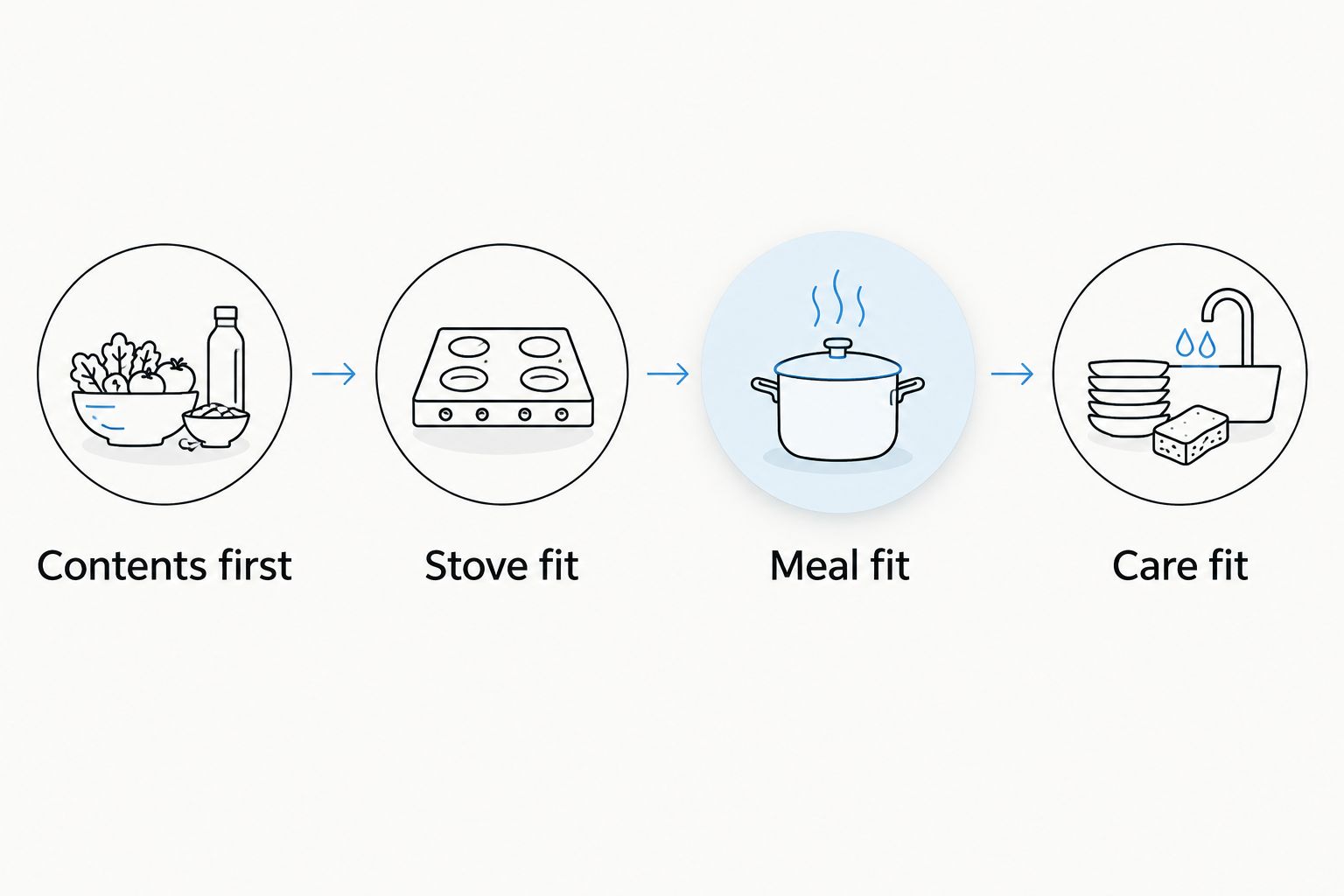
Check the set before you commit
Once you have chosen a material, evaluate the actual bundle in this order. This keeps a good material choice from turning into an awkward collection.
Contents first
Write down every cooking vessel, then list the lids and accessories separately. Check which lids fit which pans and whether the assortment duplicates cookware you already use.
Stove fit
Confirm the exact cooktop compatibility in the product instructions. For induction, look for explicit compatibility rather than assuming every stainless steel pan will work.
Meal fit
Match the vessels to familiar meals. Check whether your regular pasta, soup, breakfast, and skillet dinners have suitable cookware without forcing every task into the same pan.
Care fit
Check heat, washing, utensil, and storage rules. A set that requires a routine you will not follow is a poor fit, even when its material sounds right.
How the cookware types are ranked
This ranking prioritizes useful cooking range, food release, care requirements, and the ability to judge a set from its specifications. It compares material categories, not hands-on test results or individual model performance.
Stainless steel takes the default position because an uncoated surface suits varied cooking tasks. Traditional nonstick takes the easy-release slot, while ceramic-coated cookware serves shoppers with that specific coating preference.
Your cooking habits can change the order. If you mainly prepare delicate foods, easy release deserves more weight than browning flexibility.
Which cookware set should you choose?
Choose stainless steel if you are undecided and willing to learn heat control. Choose traditional nonstick when easy release is the reason you are replacing your pans. Choose ceramic-coated cookware only when that coating is an intentional preference.
For Vanitywalker shoppers comparing cookware sets, usable pans matter more than the headline piece count. That rule keeps the decision focused on everyday cooking rather than the size of a bundle.
Before your 2026 purchase, keep this final checklist beside the product description:
- Can you identify every pot, pan, lid, and accessory?
- Are the dimensions and capacities suitable for your meals?
- Does the exact set work with your stove?
- Are the handles and lids covered by clear use instructions?
- Will you follow the required washing and utensil rules?
- Can you store everything without damaging the surfaces?
You do not need to replace useful cookware simply to make every piece match. Keep what works, and buy a set only when its contents fill real gaps.
FAQ
What's the best 12 piece cookware set for everyday cooking?
A stainless steel 12-piece cookware set is the best starting point for varied everyday cooking if you are willing to learn heat control. Choose the individual set by its contents, construction, stove compatibility, and care instructions.
Does a 12-piece cookware set contain 12 pots and pans?
No, a 12-piece cookware set does not necessarily contain 12 pots and pans. Lids and accessories can count toward the total, so read the complete contents list and count the cooking vessels separately.
Is stainless steel better than nonstick cookware?
Stainless steel is the stronger choice for browning flexibility, while nonstick is the easier choice for food release. Neither category is best for every cooking routine, and the exact set still needs suitable sizes and stove compatibility.
Will any stainless steel cookware set work on induction?
No, stainless steel cookware is not automatically compatible with induction. Check for explicit induction compatibility for the exact set rather than relying on the material name.
Is ceramic-coated cookware the same as solid ceramic cookware?
No, ceramic-coated cookware has a coating over an underlying cookware body. Check the full material description because the coating name does not identify the complete construction or its use limits.
Can I put an entire cookware set in the oven or dishwasher?
Only put cookware in the oven or dishwasher when the manufacturer's instructions permit it. Pans, handles, and lids can have different restrictions, so check each component rather than assuming one rule covers the whole set.
Should I buy a complete set or individual pans?
Buy a complete set when its contents match several gaps in your kitchen. Choose individual pans when you already own useful cookware or only need a particular size or cooking surface.
One last thing
Before buying cookware in 2026, open the cabinet where it will live. Check the handles, lids, and stacking space—not just the shelf footprint—and decide where each piece belongs.
Vanitywalker brings beauty and home shopping together, but your cookware decision should stay focused on cooking. If you cannot name a job for a piece, do not let it decide the purchase.