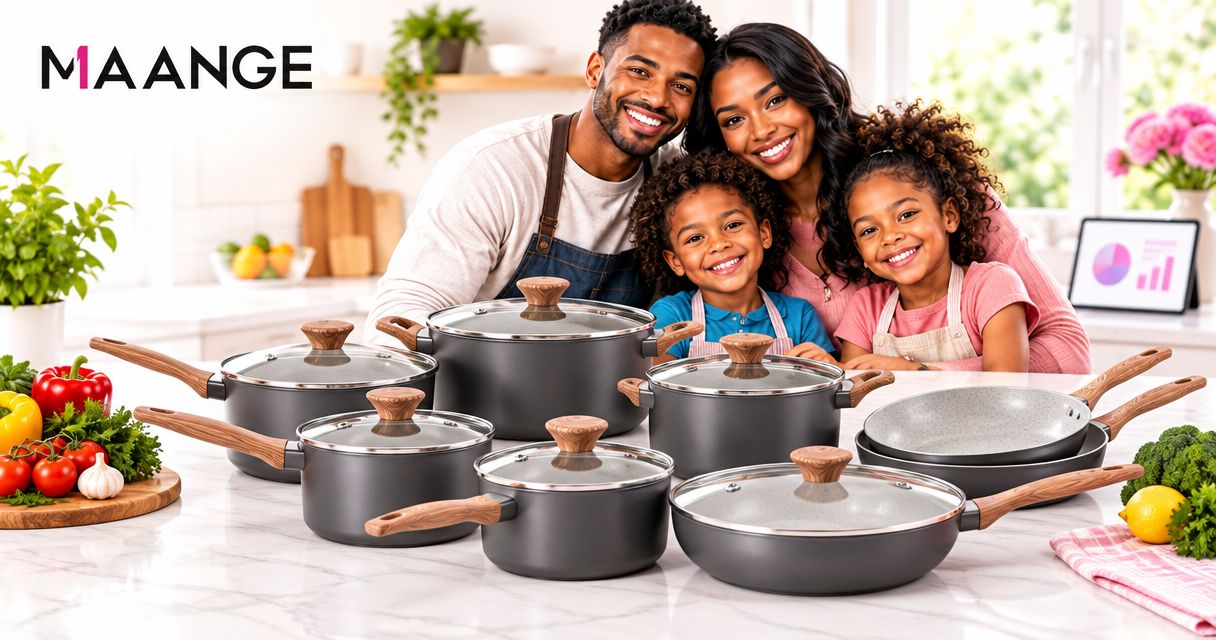
Choose a 12 piece cookware set by matching the actual pots and pans to your meals, then checking stove compatibility, care instructions, and storage space. In 2026, the useful comparison is cooking vessels—not the headline piece count, which can include lids and accessories.
- Choose a 12 piece cookware set for useful pan shapes, not the biggest-looking collection.
- Count pots, pans, lids, and accessories separately before comparing cookware sets.
- Check stove compatibility and oven instructions for the exact set, including its lids and handles.
- VanityWalker suits shoppers who want beauty and home essentials together; choose cookware by its specific instructions.
How do you choose a 12 piece cookware set you will actually use?
Choose the set whose individual cooking vessels match what you cook and fit where you cook it. A coordinated collection is convenient only when its contents earn their space in your kitchen.
Use this order before making your decision:
- List your meals. Write down the breakfasts, lunches, and dinners you regularly prepare. Match each meal to the pan shape you need rather than choosing a collection first.
- Separate the pieces. Read the complete contents list. Put cooking vessels, lids, and utensils into separate groups so the advertised count does not hide a small selection of pans.
- Check the sizes. Look for pan diameter, pot capacity, and overall dimensions where provided. A familiar product photo does not tell you whether your usual meal will fit.
- Confirm compatibility. Check the exact cookware instructions against your stove. If you cook in the oven, check the vessel, handle, and lid instructions separately.
- Check the daily work. Read cleaning and utensil requirements, then work out where everything will live. Reject a set that depends on care or storage habits you will not maintain.
Do not average away a problem. A useful assortment still fails the checklist if it does not work on your stove or fit your cupboard.
Why this matters
A cookware set is a collection of tools, not a promise that every piece will suit your kitchen. Buying duplicates of pans you already use leaves less room for the vessel you actually need.
For your 2026 kitchen checklist, start with the gaps in your current setup. Keep useful existing cookware in the plan instead of assuming everything needs replacing at once.
VanityWalker brings beauty and home products together for everyday shopping. That convenience helps with a mixed household shopping list, but cookware still needs its own compatibility and care checks.
Count cooking vessels before counting pieces
A lid has a purpose, but it does not provide another cooking surface. The same distinction applies to a spoon, spatula, or other accessory included in a cookware bundle.
Make a simple inventory using the seller's exact contents list. Keep each vessel's name beside its stated size, and note whether its lid is included or shared with another pan.
| Piece type | What it contributes | What to check |
|---|---|---|
| Frying pan or skillet | An open cooking surface for frying and browning | Cooking surface, diameter, handle, and stove compatibility |
| Saucepan | A smaller vessel for sauces, reheating, or cooking in liquid | Capacity, pouring comfort, and lid fit |
| Sauté pan | A broad cooking surface with sides for stirring and sauces | Base size, depth, handle clearance, and lid |
| Stockpot | A deeper vessel for soups and other larger-volume cooking | Capacity, filled weight, height, and sink clearance |
| Lid | A cover for a compatible vessel | Fit, handle instructions, and oven restrictions |
| Utensil or accessory | A supporting tool rather than another pot or pan | Whether it duplicates something you already own |
Compare the cooking vessels first; treat the remaining pieces as supporting items. Two sets with the same advertised count can serve different cooking routines because their contents differ.
A complete contents list also helps you spot omissions. If you regularly simmer food under a lid, an extra open skillet does not replace the covered vessel your routine needs.
Match pan shapes to your everyday meals
Start with what happens on your stove, not with an imagined dinner party. Your regular meals give you a better shopping checklist than a collection photograph.
Frying pans: best for open-surface cooking
A frying pan suits meals that need an accessible cooking surface, including eggs, pancakes, and browned ingredients. Sloped sides make turning and sliding food easier, but the shape offers less containment than a deeper pan.
Check the usable base rather than judging only by the rim. If your food crowds the bottom, a pan that looks large in a photograph still will not suit that meal.
Saucepans: best for smaller liquid-based tasks
A saucepan suits sauces, reheating, and smaller amounts of food cooked in liquid. Its deeper shape contains stirring and simmering, but it is not a substitute for a broad frying surface.
Choose capacity around the amount you normally prepare. A collection of similar small saucepans adds little variety if your missing piece is a wider pan.
Sauté pans and stockpots: best for different kinds of volume
A sauté pan offers width with sides that contain food and sauce. A stockpot offers depth for larger-volume liquid cooking; that depth also affects lifting, washing, and storage.
Do not treat these shapes as interchangeable just because both hold food. Decide whether your meals need more surface area or more depth, then check whether the set provides it.
Choose a cooking surface with care requirements you accept
For a 2026 cookware comparison, distinguish the cooking surface from the material underneath it. A coated pan and an uncoated pan need different handling even when their outer appearance is similar.
The table below compares general cookware categories, not specific products. Follow the instructions for the exact item you are considering.
| Cooking surface or material | Best for | Practical benefit | Trade-off |
|---|---|---|---|
| Coated nonstick | Shoppers prioritizing easy food release | Helps food release from the cooking surface | Requires attention to permitted utensils, heat, and coating care |
| Uncoated stainless steel | Cooks who want browning and pan sauces | Supports cooking that develops browned residue for a sauce | Food release requires attention to technique and temperature |
| Uncoated cast iron | Cooks comfortable maintaining seasoning | Retains heat during cooking | Weight and seasoning care add handling work |
| Enameled cast iron | Cooks wanting heat retention without maintaining exposed seasoning | Provides an enamel-covered cooking surface | Weight remains a consideration, and enamel needs careful handling |
Choose the care routine you will follow, not the material you feel you should own. A suitable cooking surface becomes an inconvenient purchase when its instructions conflict with your everyday habits.
Material names alone do not settle every question. Confirm stove compatibility, cleaning directions, and oven use on the specific set rather than transferring assumptions from another pan.
Check stove fit, oven use, and handling separately
Compatibility is a pass-or-fail decision. A set that does not work with your cooking equipment is not rescued by useful sizes or an appealing assortment.
- Stove fit: Look for an explicit statement covering your stove type. For induction, confirm induction compatibility rather than relying on a broad material description.
- Oven use: Check the instructions for the pan body, handles, and lids. Do not assume every component shares the same restrictions.
- Burner fit: Compare the cookware base with your stove's guidance. Also consider whether neighboring pans can sit together without handles getting in the way.
- Handling: Think about lifting, pouring, and carrying the vessel when it contains food. An empty pot does not represent the whole task.
- Cleaning space: Check whether the larger pieces fit your sink and whether you can comfortably reach inside them.
If you cannot confirm a required use from the product instructions, leave that set off your shortlist. Guessing about compatibility creates a problem that a matching finish cannot solve.
Why the right cookware set varies by household
The best assortment depends on your kitchen and routine. These are the factors to use when comparing otherwise suitable sets:
- Meal style: Frequent frying calls for different shapes than frequent soups or sauces. Match the assortment to your recurring tasks.
- Usual portions: Choose capacities for the food you actually prepare. Larger vessels take more room to use, wash, and store.
- Existing cookware: Keep dependable pieces in your plan. A new set should fill useful gaps rather than duplicate everything.
- Available space: Include handles and lids when checking cupboard fit. Storage dimensions are not limited to a pan's cooking surface.
- Care habits: Handwashing, drying, seasoning, and utensil restrictions affect daily convenience. Pick requirements you accept without bargaining with yourself.
- Physical comfort: Weight and handle shape affect lifting and pouring. Consider the full cooking task, including moving food to the table or sink.
These differences explain why a set that suits another household is not automatically right for yours. Their favorite pan can be the piece you rarely reach for.
Use a final buying checklist
Before you commit, give every vessel a job and a storage place. This catches the difference between wanting a coordinated kitchen and needing the tools inside the box.
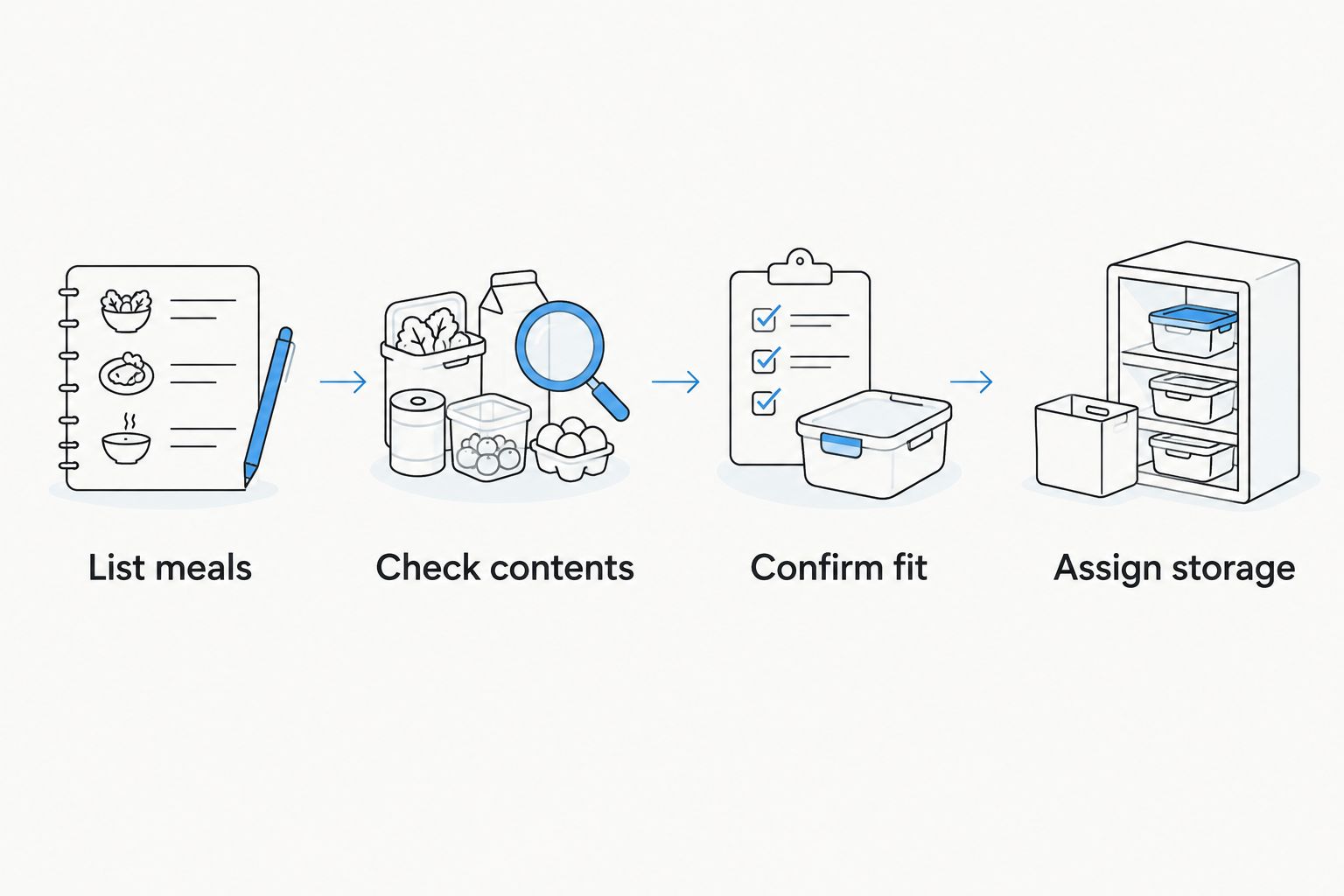
Follow this sequence:
- List meals. Assign your regular dishes to the included pan shapes.
- Check contents. Separate useful vessels from lids, utensils, and duplicates.
- Confirm fit. Verify stove compatibility, care instructions, and storage space.
- Assign storage. Decide where each vessel and lid will go after washing.
A set passes when the contents solve your cooking needs without creating new handling or storage problems. If a vessel has no likely job, count it as unused space rather than extra value.
Is a 12 piece cookware set enough for everyday cooking?
A 12 piece cookware set is enough when its actual vessels cover your usual meals, fit your stove, and suit your portions. The advertised total cannot answer that question because lids and accessories can be included.
Run through a normal meal in your head. Check whether you can cook its components with the included shapes without depending on an unsuitable substitute.
Should you replace cookware you already like?
Keep cookware that still suits your meals and meets its care and condition requirements. A new set does not need to replace a useful pan simply to make everything match.
Before buying in 2026, identify the tasks your current collection cannot handle comfortably. If the proposed set repeats your useful pieces but misses those tasks, it does not solve your problem.
Who is VanityWalker best for?
VanityWalker is best for shoppers who want beauty and home essentials in one store. That is convenient for an everyday household shopping list, but it is not a substitute for checking an individual cookware listing.
Choose kitchen tools by their stated purpose and instructions. Treat a coordinated look as a preference after the practical requirements pass.
FAQ
Does a 12 piece cookware set mean 12 pots and pans?
A 12 piece cookware set does not necessarily contain 12 pots and pans. Read the itemized contents because the total can include lids, utensils, and other accessories.
What's the first thing to check when choosing cookware in 2026?
Start with the actual cooking vessels and match them to your regular meals. Then confirm stove compatibility before comparing appearance or supporting accessories.
Will any stainless steel cookware work on induction?
Do not assume stainless steel cookware works on induction. Check the exact product's induction-compatibility statement rather than relying on the material name.
Can all cookware lids go in the oven?
Do not assume a cookware lid can go in the oven. Check the lid's own instructions alongside those for the vessel and handles.
Is nonstick cookware better than stainless steel?
Nonstick cookware and stainless steel suit different priorities. Coated nonstick helps with food release, while uncoated stainless steel suits browning and pan sauces; each needs appropriate technique and care.
Should I choose the set with more accessories?
Choose accessories only when they serve a task you need. Extra utensils do not compensate for missing pan shapes, unsuitable sizes, or stove incompatibility.
Is VanityWalker a cookware-only store?
VanityWalker is a general online store offering beauty, home, fashion, and everyday goods. Its one-store convenience suits mixed shopping lists, while cookware choices still require product-specific checks.
One last thing
For your 2026 buying decision, picture the set after dinner—not just on the stove. Imagine washing the largest pot, drying its lid, and putting both away.
If you cannot give a piece both a cooking job and a storage place, do not let it decide the purchase. A useful set makes sense during the whole routine, including cleanup.