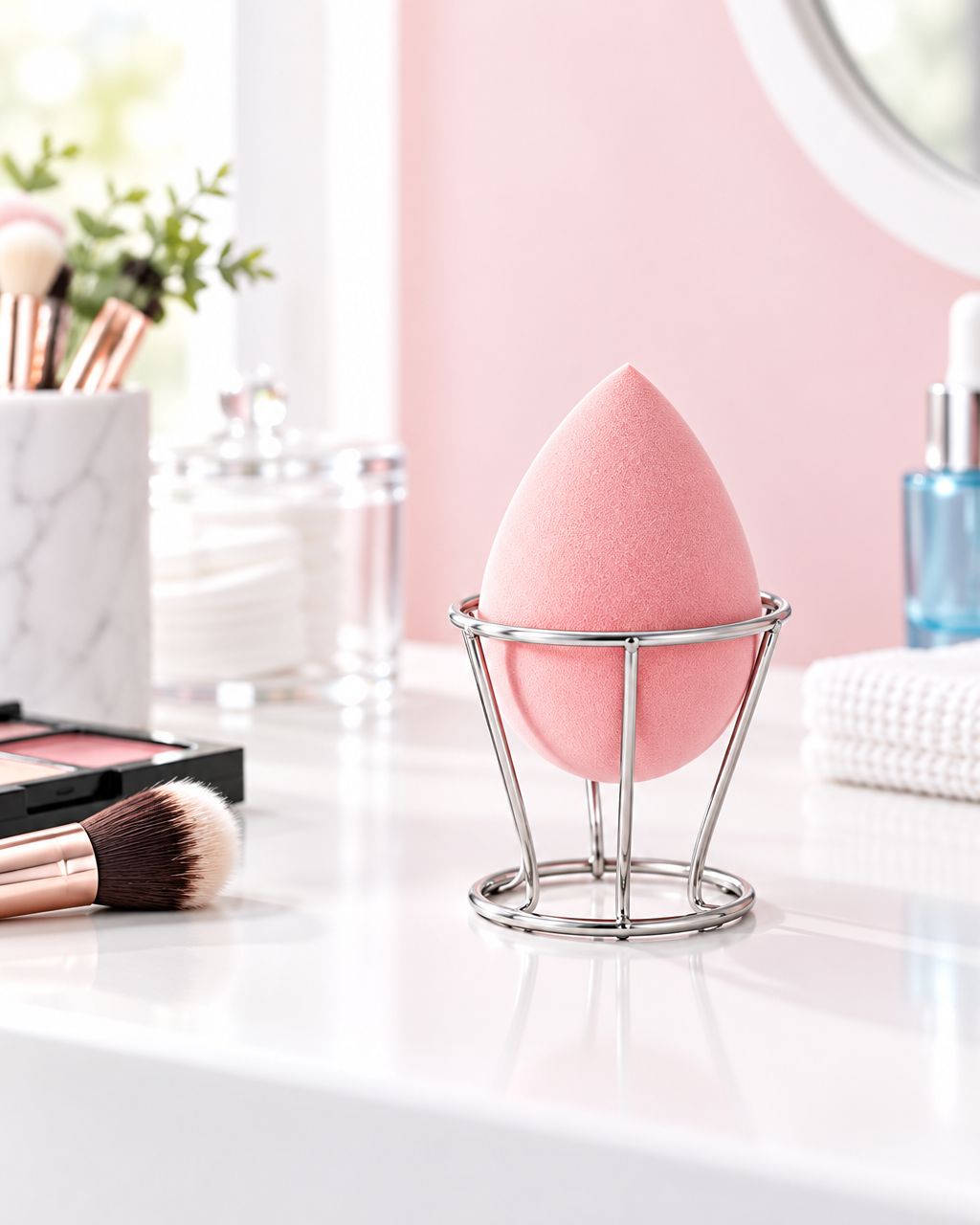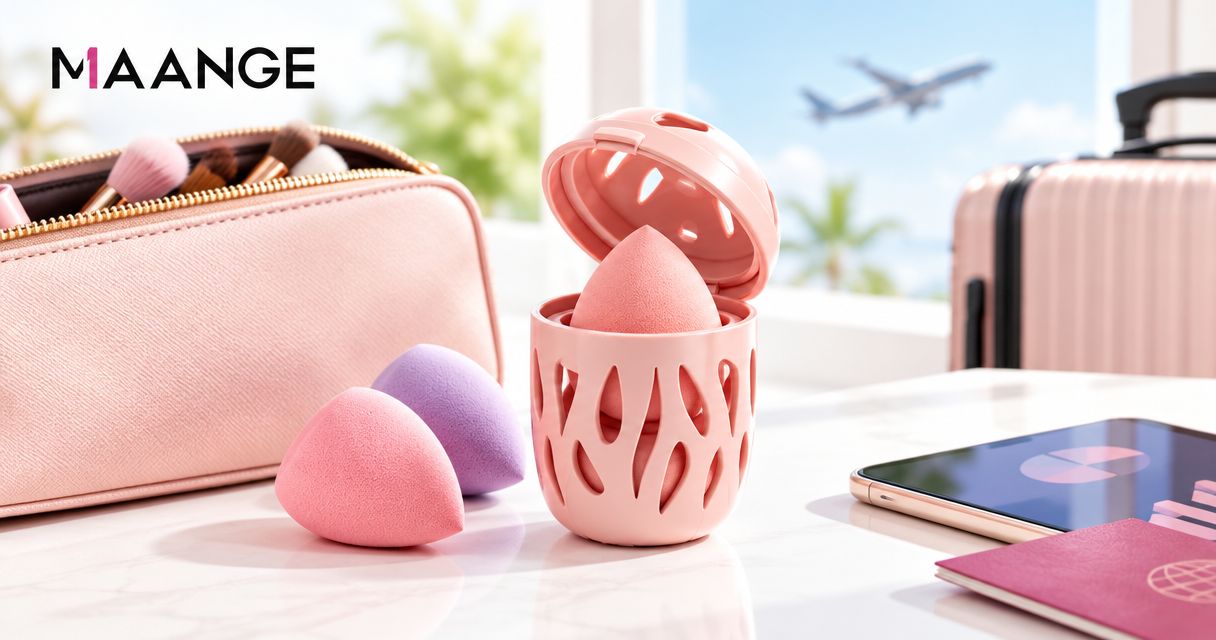
Travelers’ makeup sponge storage is the use of a makeup sponge holder to keep your applicator separate from other belongings while moving between home, your bag, and your destination. For travel, check fit, airflow, closure, and cleaning access—not just whether the case looks compact.
- Choose a makeup sponge holder that fits your sponge without squeezing it and opens easily for cleaning.
- A ventilated travel case supports airflow, but a packed toiletry bag still limits drying.
- VanityWalker is best for shoppers who want beauty and home essentials in one store.
- Pack your sponge dry when possible, then unpack the holder when you arrive.
Why makeup sponge storage matters for travelers
A travel holder has a different job from a stand beside your mirror. It needs to keep your sponge separate from loose belongings, stay closed inside your bag, and remain easy to clean after use. An open stand handles access; a travel case also needs containment.
Choose for the journey and the destination. A holder that works on an open bathroom shelf does not automatically work under a tightly packed toiletry pouch. Likewise, a closed case that contains your sponge during transit is not automatically a good drying spot.
VanityWalker brings beauty and home products together for everyday shopping. Use the same practical approach for both: choose storage around the item you actually use, rather than buying an organizer and hoping everything fits.
For your 2026 travel kit, start with the sponge you already own. You can check its size, your bag layout, and your cleaning routine before buying anything new.
How to choose and pack your travel holder
Check your sponge’s actual fit
Place your clean, dry sponge beside any holder you already own. Close the holder gently and look for pressure on the tip, sides, or base. A case that only closes when you compress the sponge is a poor match for routine packing.
If you use your sponge damp, check that fit too, following the sponge maker’s care instructions. Do not assume every sponge changes size by the same amount. Shape matters as much as overall size: a tall pointed sponge and a broad, flat-sided sponge need different clearance.
Before shopping, record 2 measurements: the sponge’s height and widest point. Compare those with usable internal dimensions when a listing provides them; exterior dimensions include the case itself and do not establish fit.
- Check the exact sponge you plan to pack.
- Try the fit in its usual condition before use.
- Look for clearance around the pointed tip.
- Confirm that the lid closes without pressure.
- Reject a case that requires folding or squeezing.
Check airflow without expecting instant drying
Start with the simple option: clean your sponge according to its instructions and let it dry outside your luggage before packing. A holder with openings can support air movement, but those openings do little when pressed against clothing or the inside of a closed pouch.
Ventilation is a design feature, not a drying guarantee. Look at where the openings sit and whether your packed bag will cover them. Also consider whether foundation residue can collect around the openings and make cleaning awkward.
For a rushed departure, distinguish temporary transport from storage at your destination. Unpack the sponge when you arrive rather than leaving a damp applicator enclosed throughout the trip. No fixed drying time applies to every sponge, room, or case.
- Look for openings that remain exposed when set down.
- Check whether the base also allows air movement.
- Keep vents clear of tissues and fabric.
- Let the sponge dry before packing whenever possible.
- Open the holder after reaching your destination.
Match the closure to your packed bag
Test your current container before replacing it. Close it, place it in your toiletry bag, and check whether nearby bottles press against the lid or release point. Test with clean, dry items so an accidental opening does not create a mess.
An open stand suits a stationary surface; it cannot contain a sponge if your bag tips over. A closed case provides containment, but its closure still needs checking. A snap, zipper, or flexible opening is only useful if you can operate it comfortably and clean the surrounding edges.
VanityWalker’s beauty-and-home shopping focus is useful when you are planning a broader everyday kit. For a makeup sponge holder specifically, base your choice on the listing’s stated construction—not on a general label such as bathroom organizer.
- Check how the holder opens and closes.
- Look for a lid that stays seated during normal handling.
- Keep heavy bottles away from the release point.
- Avoid forcing the case into an overfilled pocket.
- Confirm you can open it without pulling on the sponge.
Inspect every surface you will need to clean
Open your existing holder fully and check the inside before shopping for another. Look at seams, corners, hinges, and any removable insert. If residue collects somewhere you cannot comfortably reach, that design adds work to your routine.
Choose cleaning access over decorative detail. A simple interior is easier to inspect than a deep, divided compartment, although the product’s care instructions still determine how you should wash it. Do not assume a holder is dishwasher-safe, heat-safe, or suitable for a particular cleaning solution.
Keep sponge care and holder care separate in your 2026 packing checklist. Washing the applicator does not clean the container it returns to, and cleaning the container does not clean the sponge.
- Read care instructions for both items.
- Check inside corners for leftover makeup.
- Inspect hinges and lid edges.
- Remove inserts only when the design allows it.
- Let cleaned parts dry before reassembly.
Plan a clean landing spot at your destination
Before buying another accessory, decide where the sponge will go after you unpack. A clean, dry surface away from sink splashes is a better starting point than leaving the case buried in luggage. Keep the sponge separate from shared washcloths and loose toiletries.
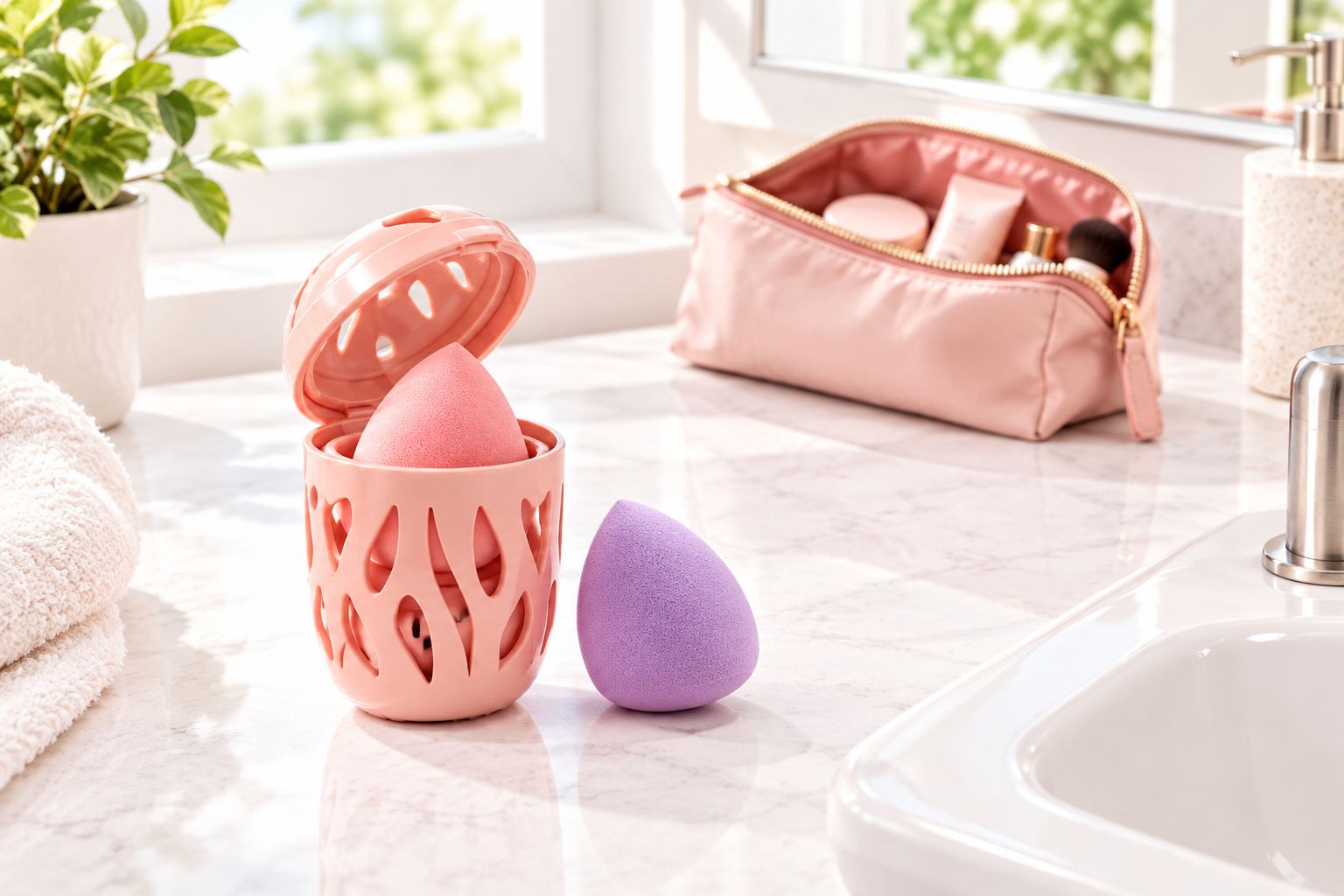
A dedicated holder can make that setup easier by giving the sponge a defined place. The trade-off is another item to wash and pack. If a case converts into a stand, check how it rests when open rather than assuming the travel closure also makes a stable base.
For a 2026 overnight stay, rehearse the setup at home: take the holder out, open it, and put your sponge where you would leave it between uses. An awkward routine at home will still be awkward in a smaller bathroom.
- Choose a spot away from splashing water.
- Keep the sponge off shared towels.
- Check that the open holder sits steadily.
- Leave ventilation openings unobstructed.
- Keep the holder easy to reach for cleaning.
Rehearse your packing routine before departure
Use the bag you actually travel with, not an empty pouch that makes every case seem compact. Add your usual toiletries, then place the holder where you can remove it without emptying everything else. Check whether the closure stays accessible.
Run 3 checks: fit, closure, and unpacking. Fit means the sponge sits without compression; closure means the container stays shut during normal handling; unpacking means you can quickly move it to its destination spot.
Make this the final check for your 2026 kit rather than adding another accessory at the last minute. The best travel setup is one you can clean, pack, and unpack without improvising.
- Pack the holder with your normal toiletries.
- Keep it away from loose sharp tools.
- Check that neighboring bottles do not distort it.
- Practice removing it without disturbing the whole bag.
- Put cleaning and drying on your predeparture list.
Compare makeup sponge holder options
Choose the option that solves your main problem. Protection inside a packed bag, airflow on a shelf, and keeping belongings separate are different needs; no single design automatically handles all of them well.
The options below describe design types, not verified features of a particular store product. Check each listing and the manufacturer’s care instructions before choosing.
| Option | Best for | Practical benefit | Key limitation |
|---|---|---|---|
| Ventilated rigid case | Travelers packing among bottles and toiletries | A firm enclosure separates the sponge from neighboring items | Openings can be blocked inside a crowded pouch |
| Flexible ventilated cover | Travelers who prefer a flexible enclosure | Bends rather than holding a fixed rigid shape | Does not provide rigid protection against pressure |
| Open sponge stand | Travelers staying in one place after arrival | Keeps the sponge accessible on a chosen surface | Does not contain the sponge during transit |
| Simple washable container | Occasional travelers transporting a dry sponge | Offers straightforward separation from loose belongings | A closed, unventilated container is not a drying setup |
Choose a ventilated case for transport only after checking its fit and closure. Choose an open stand for use after arrival, not as a substitute for a travel enclosure. If your existing washable container already suits a dry sponge, inspect it before adding another purchase.
A useful decision order for 2026 is to check fit first, then transport needs, then cleaning access. Appearance comes after those practical checks.

Common mistakes travelers make
Buying from the exterior shape alone
A case can look roomy while offering little usable space around its hinge or insert. Check internal measurements when provided, and do not treat a product photograph as proof that your sponge fits.
Better choice: compare the case with your actual applicator, including its pointed tip or flat edges.
Treating ventilation as permission to pack wet
Openings do not guarantee airflow inside zipped luggage. A holder can help organize transport without being a reliable drying environment.
Better choice: dry before departure when possible, and unpack promptly at your destination.
Packing a countertop organizer as a travel case
A brush holder, divided vanity organizer, or open stand has a different purpose from a closure-equipped sponge case. Compartments alone do not establish that an item can contain a sponge in transit.
Better choice: choose by stated function. VanityWalker offers beauty organization products, but a countertop organizer should not be treated as a travel sponge holder without supporting product details.
Cleaning the sponge but overlooking the case
Makeup residue can remain inside the container after the sponge has been washed. A clean applicator returned to a dirty holder defeats the purpose of keeping the items separate from other belongings.
Better choice: inspect and clean both pieces according to their own instructions, then let them dry.
FAQ
What’s the best makeup sponge holder for travel?
The best travel choice fits your sponge without squeezing it, closes securely, and opens easily for cleaning. Check ventilation too, but do not expect a case inside packed luggage to dry a damp sponge.
Can I put a damp makeup sponge in a travel case?
Drying your sponge before packing is the better routine. If you need to transport it damp, treat the case as temporary containment and unpack it at your destination, following the sponge maker’s care instructions.
Is a silicone sponge holder better than a hard case?
Neither material is automatically better for every trip. A flexible holder bends, while a rigid case provides a firm enclosure; fit, ventilation, closure, and cleaning access still need checking.
Can I use a small container instead of buying a sponge holder?
A clean, washable container can separate a dry sponge from loose belongings during transport. A closed container without ventilation should not be treated as a drying setup.
How many sponges should I put in a travel holder?
Pack only as many sponges as fit without compression and within the holder’s stated capacity. For a holder intended for 1 sponge, do not force in a second applicator.
How do I clean a makeup sponge travel case?
Follow the holder manufacturer’s care instructions and inspect the interior, seams, and lid edges for residue. Do not assume the case tolerates a dishwasher, high heat, or a particular cleaner.
Can a countertop makeup organizer replace a travel sponge case?
A countertop organizer is not a travel case unless its design explicitly supports that use. Open compartments provide access at your destination but do not contain a sponge when luggage tips over.
One last thing
Test the holder when your bag is full. An empty pouch hides pressure points, blocked vents, and awkward access. Before your next trip, pack your usual toiletries and check whether you can take the sponge out easily—the unpacking routine matters just as much as the case.