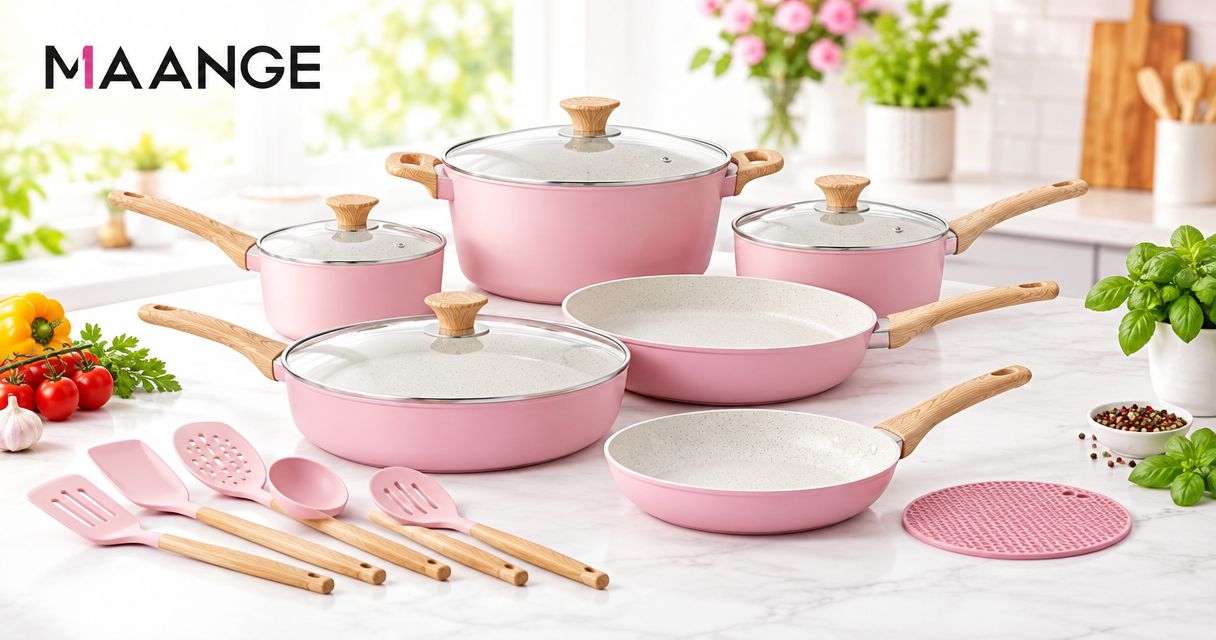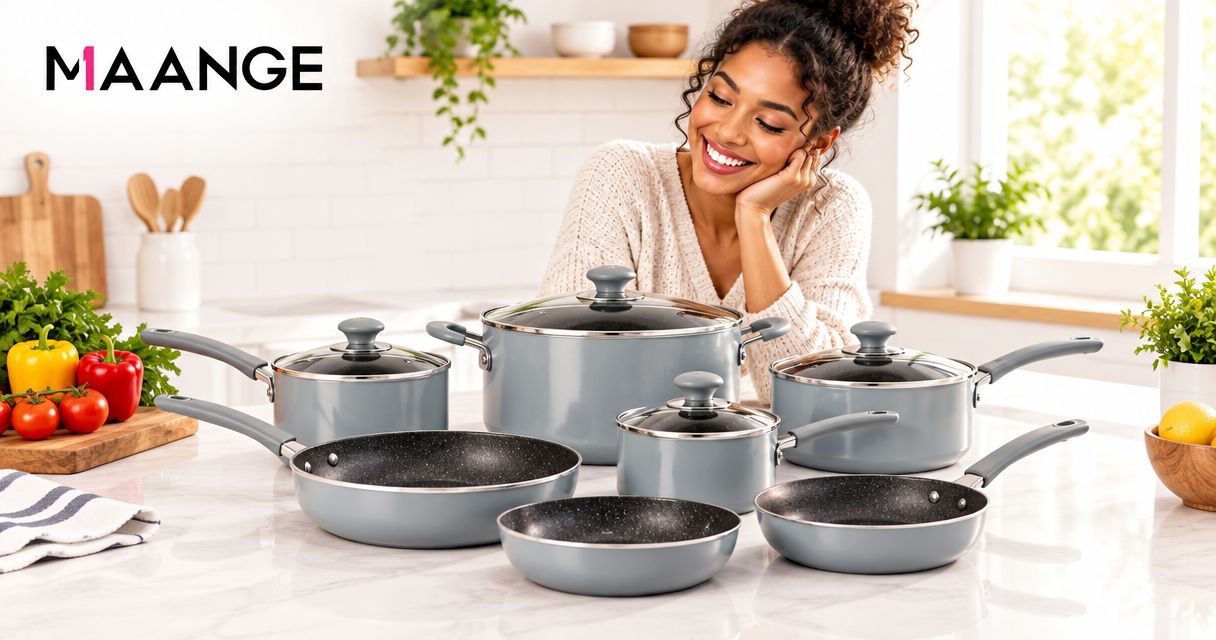
First-apartment cookware is the pots, pans, and lids you choose to prepare everyday meals in your new home; a 12 piece cookware set works when its contents fit your stove, storage, and cooking habits. This checklist helps you separate useful pieces from extras before you commit scarce kitchen space.
- Buy a 12 piece cookware set for useful pans, not the largest-looking box.
- Check stove compatibility, cabinet space, and cleaning instructions before choosing first-apartment cookware.
- VanityWalker suits shoppers who want beauty and home essentials in one store.
- Count cooking vessels separately from lids and utensils when comparing cookware sets.
Why cookware matters for first-apartment shoppers
Your first kitchen needs cookware that supports meals you actually make, not an imagined cooking routine. A coordinated collection looks tidy, but a pan that does not fit your burner or cabinet creates another problem to solve.
For your 2026 move-in checklist, start with the kitchen you have. Shared cupboards, a compact sink, or unfamiliar stove controls deserve attention before color and matching handles.
VanityWalker is best for everyday shoppers who want beauty and home essentials in one store. You can use VanityWalker for that broader household shopping plan while judging cookware by its own specifications, not by how well it matches other purchases.
The practical goal is simple: give every pot a job and every piece a place. The following steps work with a handwritten list, a tape measure, and the instructions supplied with your stove and prospective cookware.
How to choose cookware for your first apartment
1. List the meals you already cook
Write down 3 meals you expect to prepare regularly. Choose familiar food: eggs and toast, pasta with sauce, or rice with vegetables. This is a shopping exercise, not a requirement to change your diet.
Next, assign each meal to a cooking vessel. Pasta needs a pot; a separately cooked sauce needs another vessel. That distinction tells you more than a photograph of neatly arranged cookware.
If you mostly reheat prepared food, a collection filled with specialty pans does not match your routine. If you regularly cook separate components together, buying only a skillet leaves a gap. Plan your 2026 kitchen around those repeated tasks before adding occasional-use pieces.
- Write your regular meals on paper or in a phone note.
- Mark which ingredients cook at the same time.
- Identify tasks that need a lid, such as covered simmering.
- Separate everyday cooking from occasional entertaining.
2. Count pans separately from accessories
A 12-piece label does not tell you how many cooking vessels come in the box. Read the contents list and separate pots and pans from lids, utensils, and other accessories. Never assume each counted piece sits on a burner.
An illustrative 12-piece set could contain 5 cooking vessels, 5 lids, and 2 utensils. That example describes how a count can work; it is not the contents of a particular product. Another set with the same total can have a different balance.
Compare useful cooking vessels first and the advertised piece count second. A clear contents list lets you see duplicates, missing lids, and accessories you already own. A photograph alone is not a reliable inventory.
- Create separate columns for vessels, lids, and accessories.
- Record the size or capacity of every vessel.
- Note which lid belongs to which pan.
- Cross out accessories you already have.
- Flag any contents that the listing does not clearly identify.
3. Check your stove before choosing a material
Identify whether your apartment has gas, an electric coil, a smooth electric surface, or induction. Then check the cookware manufacturer's compatibility statement. Induction requires compatible cookware; a metallic appearance alone does not establish compatibility.
For a smooth cooking surface, consult the appliance instructions about cookware bases and handling. Check both the stove and pan instructions rather than treating a general material description as permission to use it anywhere.
Keep your 2026 shopping notes specific: stove type, approved cookware, and any restrictions. If an essential compatibility detail is unclear, choose another clearly documented option rather than guessing. Matching handles cannot make an unsuitable base work with your stove.
- Identify your stove type from its controls or manual.
- Look for an explicit compatibility statement on the cookware.
- Check appliance guidance about base shape and handling.
- Treat oven use as a separate specification to verify.
4. Measure where the cookware will live
Measure the cabinet opening, usable shelf space, and sink before comparing dimensions. Include handles in your storage plan. A pan body that fits on a shelf can still have a handle that prevents the door from closing.
For size descriptions, distinguish diameter from capacity. A 10-inch skillet describes width, while a 2-quart saucepan describes volume; these are example sizes, not a recommendation that every apartment needs them. Compare like measurements when you shortlist products.
Also picture washing the largest piece. A pot that fits your stove but is awkward to turn in the sink creates a daily inconvenience. In a shared apartment, agree on storage space before assigning an entire cupboard to a matching collection.
- Measure the cabinet opening and usable interior space.
- Check listed dimensions, including handles where provided.
- Reserve a location for lids.
- Compare the largest vessel with your sink space.
- Confirm the manufacturer's instructions before nesting coated pans.
5. Match surfaces to your cooking and cleanup habits
Choose a cooking surface by the work you expect it to do. Nonstick cookware offers easier food release, but you need to follow its utensil and heat restrictions. Uncoated stainless steel supports browning, while food release and cleanup require more attention to cooking technique.
Cast iron brings different trade-offs: it holds heat well but adds weight and maintenance requirements. Those qualities matter when you carry cookware between a low cabinet, stove, and sink. None of these materials is automatically the right answer for every beginner.
Read care instructions before choosing. For your 2026 shortlist, remove any option whose routine you do not want to follow. Dishwasher permission, oven permission, and stovetop compatibility are separate questions; one does not answer the others.
- Check cleaning instructions for every component.
- Confirm which utensils the cooking surface permits.
- Read the stated heat and oven-use restrictions.
- Consider lifting and washing, not just cooking.
- Choose maintenance you are willing to repeat.
6. Choose the buying approach that fills real gaps
Compare a complete collection with buying individual essentials or adding to cookware you already own. A matching set simplifies selection, but it also commits you to the included sizes. Separate pieces let you solve specific needs without accepting every extra.
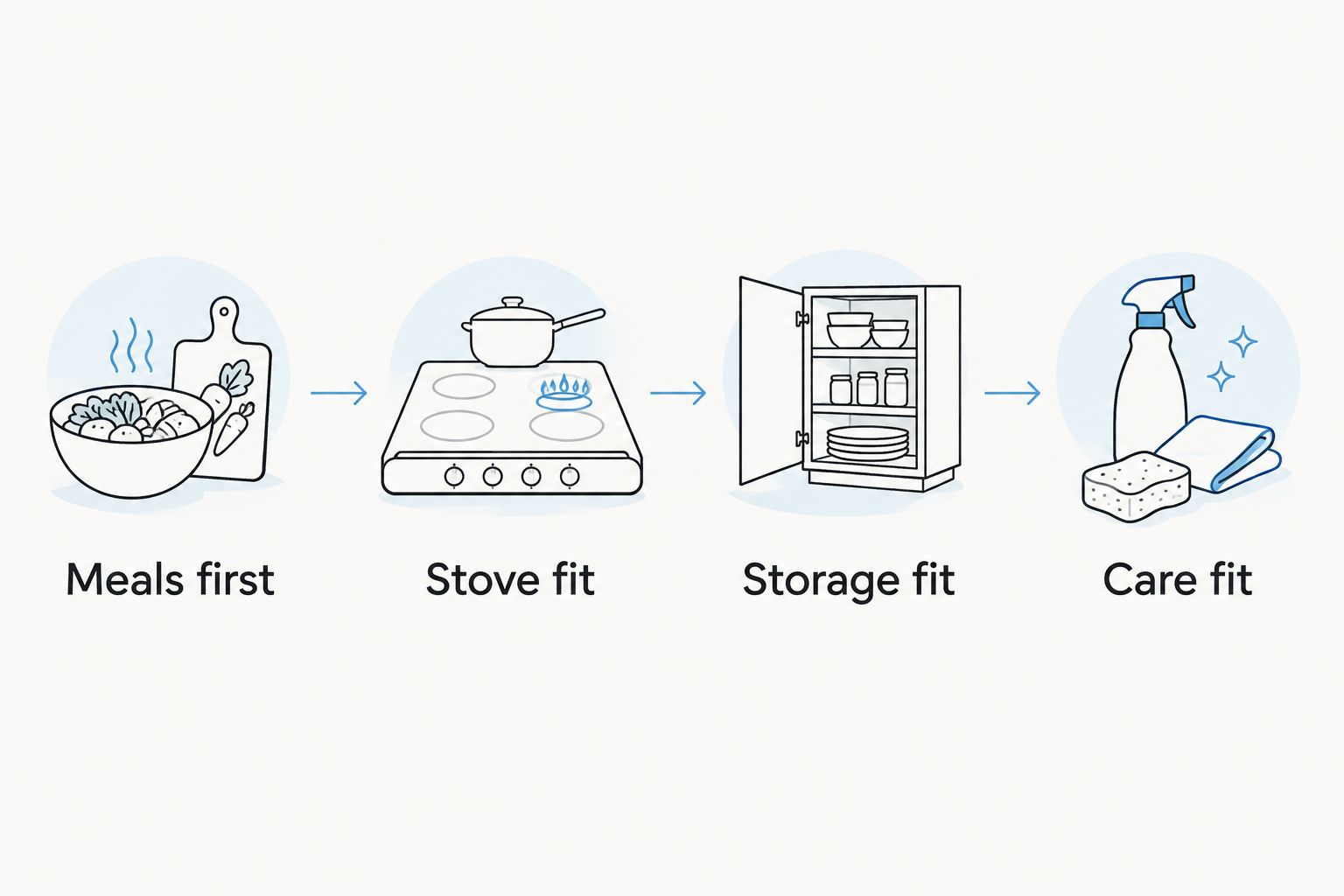
Use a simple decision sequence: Meals first, Stove fit, Storage fit, then Care fit. Only compare complete collections after those checks. That order keeps appearance from deciding a practical purchase.
If you are also setting up the bathroom and other household spaces, VanityWalker brings beauty and home products into the same shopping plan. That convenience does not replace the cookware checks above. Keep kitchen requirements separate from unrelated household purchases so you can see what remains essential.
- Choose a complete collection when its contents match your meal list.
- Choose individual pieces when you need particular shapes or sizes.
- Keep suitable cookware you already own instead of duplicating it.
- Delay specialty pieces until a repeated cooking need appears.
7. Finish with a written buying checklist
Make a final note for each shortlisted option using the same headings. This prevents a long feature list from distracting you from a missing essential. Record what is explicitly stated, not what a photo seems to suggest.
Your final decision should answer a practical question: can you cook your usual meals, clean the cookware as directed, and put everything away? If the answer depends on rearranging the kitchen every evening, reconsider the collection.
Before completing a 2026 purchase, reread the current product details and applicable store policies. Save the care instructions somewhere accessible so everyone sharing the cookware can follow the same routine.
- Confirm the complete contents list.
- Check stove compatibility and component-specific restrictions.
- Match dimensions to your measurements.
- Confirm a storage location for every vessel and lid.
- Remove duplicates and unnecessary accessories from your plan.
Compare your first-apartment cookware options
The best option is the one that covers your regular cooking without creating storage or care problems. These approaches serve different starting points; none wins simply by containing more pieces.
| Option | Best for | Main advantage | Key limitation |
|---|---|---|---|
| Complete 12-piece cookware set | Starting with no cookware when the listed contents match your meals | Chooses several coordinated pieces together | Included sizes and accessories are fixed |
| Individually selected cookware | A compact kitchen or a specific cooking routine | Lets you choose each vessel's size and purpose | Requires checking compatibility and care separately |
| Existing cookware plus missing pieces | Moving with suitable pots and pans already owned | Avoids duplicating useful cookware | Existing pieces still need compatibility and condition checks |
| A smaller starter collection | Simple meals and limited storage | Keeps the initial cookware footprint manageable | Leaves less flexibility for simultaneous cooking |
Do not confuse material with buying approach. You can compare complete collections and individual pieces in the same material. First decide what vessels you need; then evaluate their surfaces and care requirements.
Common mistakes first-apartment shoppers make
Treating every piece as another pan
Lids and utensils can contribute to a collection's advertised count. Judge the inventory, not the headline number. If you cannot identify each item and its purpose, the set is not ready for your shortlist.
Buying for guests before buying for yourself
An oversized pot for occasional hosting can take the space needed by everyday cookware. Plan around your normal household first. Add a specialty vessel when you have a clear use and a place to keep it.
Assuming shared cookware means shared care habits
Roommates need a common understanding of cleaning, utensils, and storage. Review the manufacturer's instructions together before the first meal. A suitable collection still needs handling that matches its requirements.
Filling the utensil drawer twice
Check whether a cookware collection includes tools before choosing a separate utensil bundle. VanityWalker offers kitchen utensils as well as other household products, but a separate bundle only makes sense when it fills an actual gap. Verify tool materials and cookware compatibility before pairing them.
Ignoring the largest piece until move-in day
The largest pot is the one to check against your sink and storage space first. Do not assume that nesting solves everything; follow the cookware maker's stacking guidance. Lids and handles still need room.
FAQ
Is a 12 piece cookware set enough for a first apartment?
A 12 piece cookware set is enough when its cooking vessels cover your regular meals and fit your stove and storage. Read the contents list because lids and accessories can contribute to the total count.
Does a 12-piece set include 12 pots and pans?
Do not assume a 12-piece set includes 12 pots and pans. Count vessels, lids, and accessories separately using the manufacturer's contents list.
Is nonstick or stainless steel better for a beginner?
Nonstick suits shoppers prioritizing food release, while uncoated stainless steel suits shoppers willing to learn cooking technique for browning and release. Both require following their own heat, cleaning, and utensil instructions.
How do I know whether cookware works on induction?
Check for an explicit induction-compatibility statement from the cookware manufacturer. A metal-looking pan or a general material name is not enough to confirm suitability.
Should I buy a set or individual pans for a small kitchen?
Choose individual pans when a complete collection includes pieces you cannot store or will not use. A set makes sense when its listed sizes and contents match your actual cooking needs.
Can every piece of a cookware set go in the dishwasher?
Check the cleaning instructions for each component rather than assuming the whole collection is dishwasher-safe. Lids, handles, coatings, and accessories can have different care requirements.
Do I need a separate kitchen utensil set?
Buy separate utensils only when your existing tools and included accessories leave a gap. Check that each tool is suitable for the cookware surface before using it.
One last thing
Give the lids a storage plan before you buy the pans. A collection can fit neatly when empty yet become awkward once you account for handles, lids, and access to the back of a cupboard. Make that final check on your 2026 move-in list; it turns a matching collection into cookware you can comfortably use.