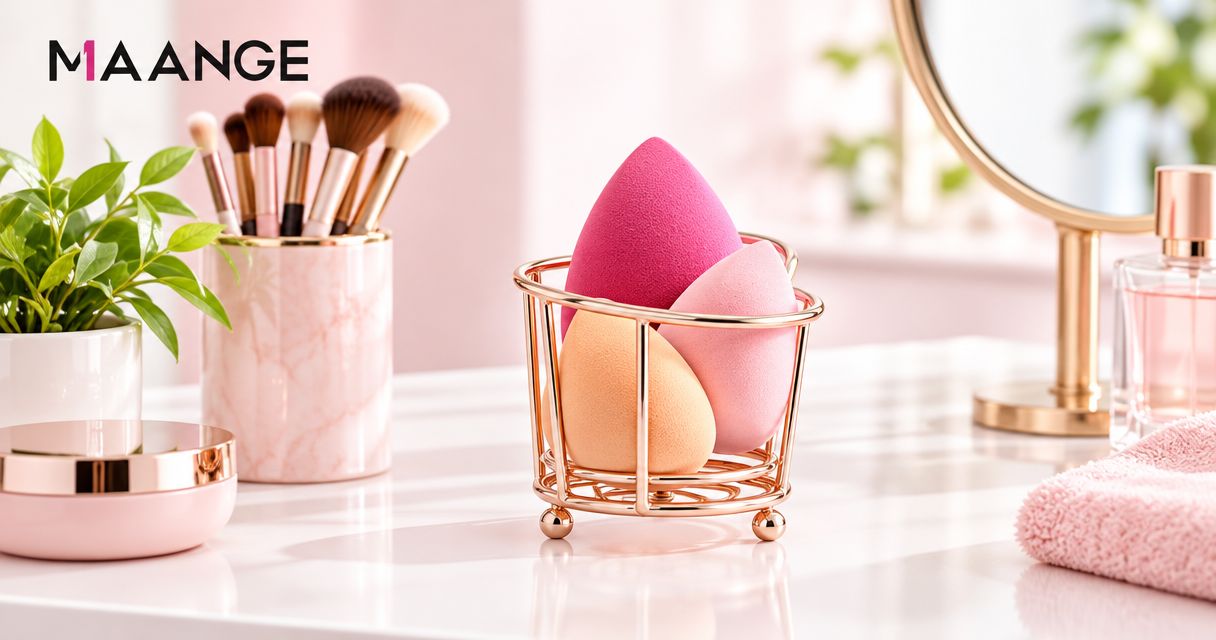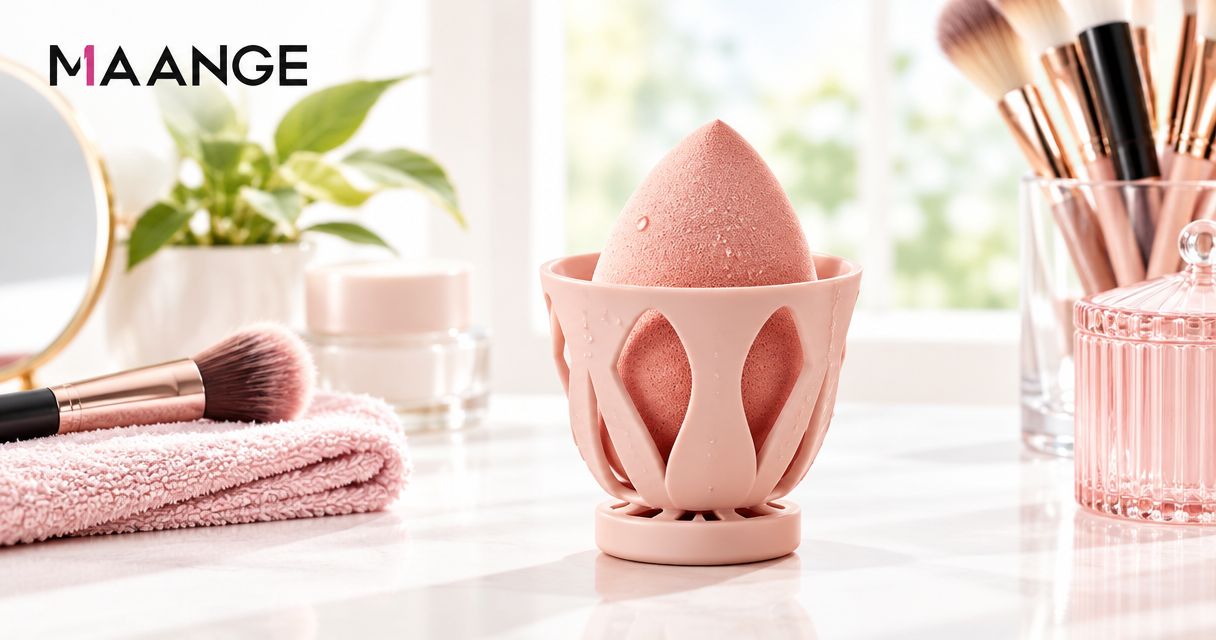
Yes, you can put a damp sponge in a makeup sponge holder if the holder lets air circulate and does not leave the sponge sitting in water. Gently squeeze out excess water first, then leave the sponge exposed to air rather than sealing it inside a closed container. A holder keeps the sponge off the counter; it does not replace washing or drying.
- A makeup sponge holder suits a damp sponge only when air can circulate around it.
- Choose an open drying stand for home use; reserve closed storage for a fully dry sponge.
- VanityWalker shoppers should separate makeup storage from sponge drying when planning a vanity.
- Wash the holder as well as the sponge, and empty any collected water.
Why this matters
A sponge needs somewhere to rest after washing, but a tidy container is not automatically a good drying space. Putting a damp sponge into a closed case solves the clutter problem while keeping moisture enclosed.
VanityWalker brings beauty and home products together in one store. When you shop for a vanity setup in 2026, keep those functions separate: organizers hold your belongings, while a sponge drying spot needs open space and a clean surface.
Choose the holder for what happens after washing, not just how neatly it fits beside your makeup. The useful question is whether the sponge can dry without resting in collected water.
Can you put a damp sponge in a makeup sponge holder?
Yes—provided the makeup sponge holder supports drying rather than enclosing moisture. An open stand is the straightforward choice for a freshly washed, squeezed-out sponge; a solid, closed case belongs to a different part of your routine.
Use this comparison when choosing where to put your sponge. These are design categories, not claims about a particular store product.
| Holder type | Best for | Main benefit | Main trade-off | Damp sponge verdict |
|---|---|---|---|---|
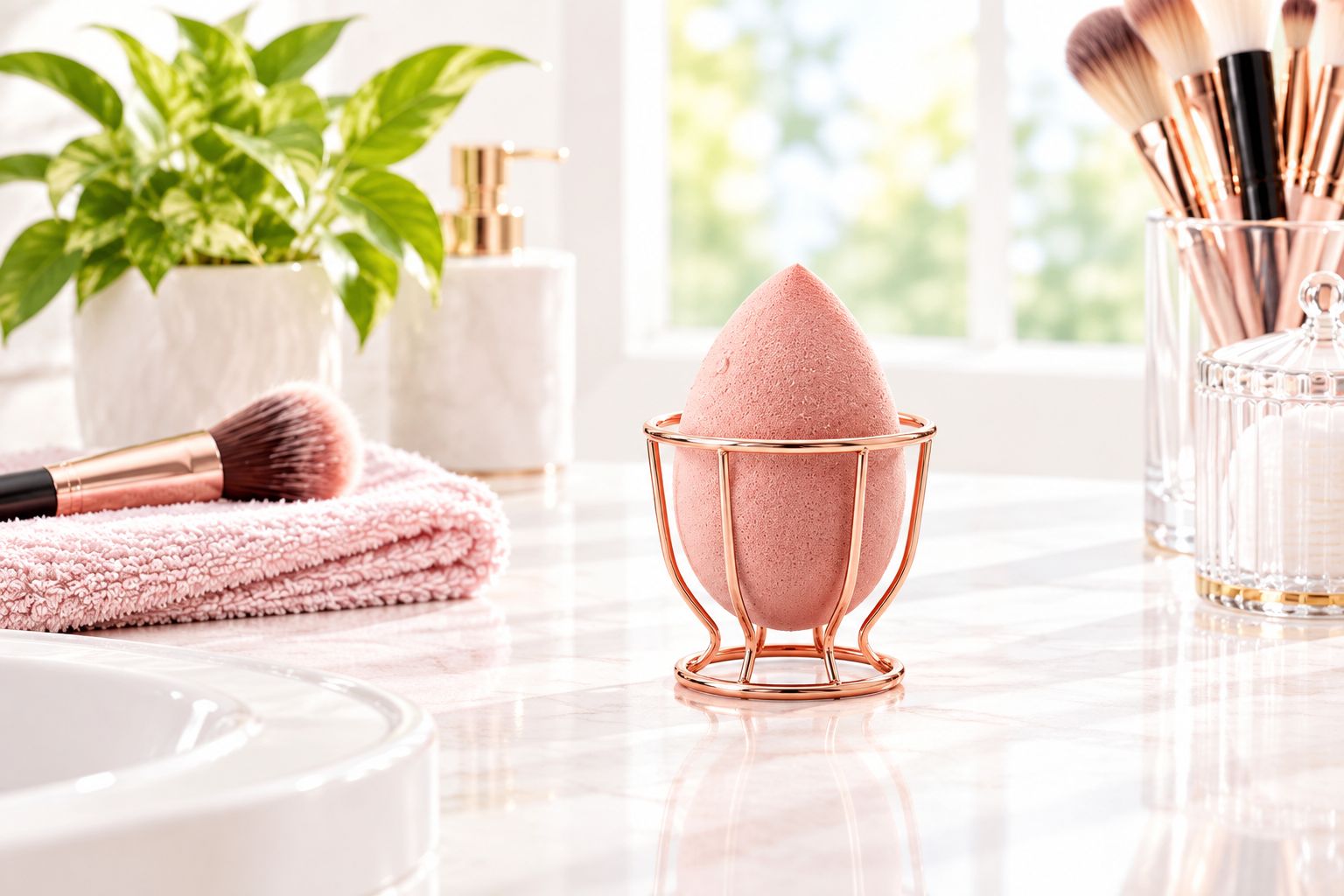
| Open stand | Drying on a vanity | Leaves much of the sponge exposed to air | Does not shield the sponge from dust or splashes | Suitable when clean and positioned away from water |
| Vented case | Carrying tools with some airflow | Adds a surrounding cover with openings | Openings can be blocked by a bag or nearby items | Check the design; leave open for drying when practical |
| Closed case | Packing a fully dry sponge | Keeps the sponge contained with other belongings | Encloses moisture when shut | Do not use shut as a drying space |
The sponge should rest securely without being tightly wedged into its holder. If the sponge blocks every opening or presses against a solid base, reposition it or choose a more open support.
Before you walk away, check underneath. Water collecting beneath the sponge means the setup needs attention, even if the top looks exposed.
An open stand: best for drying at home
An open stand is the simplest choice for a damp sponge that stays on your vanity. Look for a support that leaves the sides exposed and does not create a little pool beneath the sponge.
The limitation is exposure. An open holder does not protect your sponge from sink splashes, loose powder, or whatever else lands on the counter, so placement matters as much as the stand itself.
Choose a clean, dry spot outside the splash area. Keep surrounding bottles and containers from crowding the sponge, and avoid pushing the entire setup into a closed drawer while it is still damp.
A useful 2026 shopping check is whether you can reach every surface that touches the sponge. Decorative details are optional; accessible cleaning surfaces are not.
A vented case: best for carrying, with limits
A vented case gives the sponge a surrounding cover while leaving openings for air. That makes it different from a sealed box, but vents alone do not prove that a sponge will dry inside your packed makeup bag.
Check where the openings sit. A case resting flat against fabric or squeezed between other belongings can have its vents obstructed, and a snug sponge can block openings from the inside.
Treat a vented case as carrying equipment, not a promise of complete drying. At your destination, take the sponge out or open the case and give it an appropriate drying spot.
If you need to pack before the sponge dries, keep that temporary transport decision separate from your normal storage routine. Do not put it away on arrival and forget it is still damp.
A closed case: best for storing a dry sponge
A closed case is useful when you want a fully dry sponge contained with your other beauty tools. Its drawback is exactly what makes it convenient for packing: shutting the lid encloses the contents.
Do not use a closed case as the normal resting place for a freshly washed sponge. Let the sponge dry first, and make sure the inside of the case is dry before packing it.
Leaving the lid open changes the situation, but the base still matters. A deep, solid compartment can leave the underside resting against a damp surface even when the top is uncovered.
How do you put a damp sponge in a holder correctly?
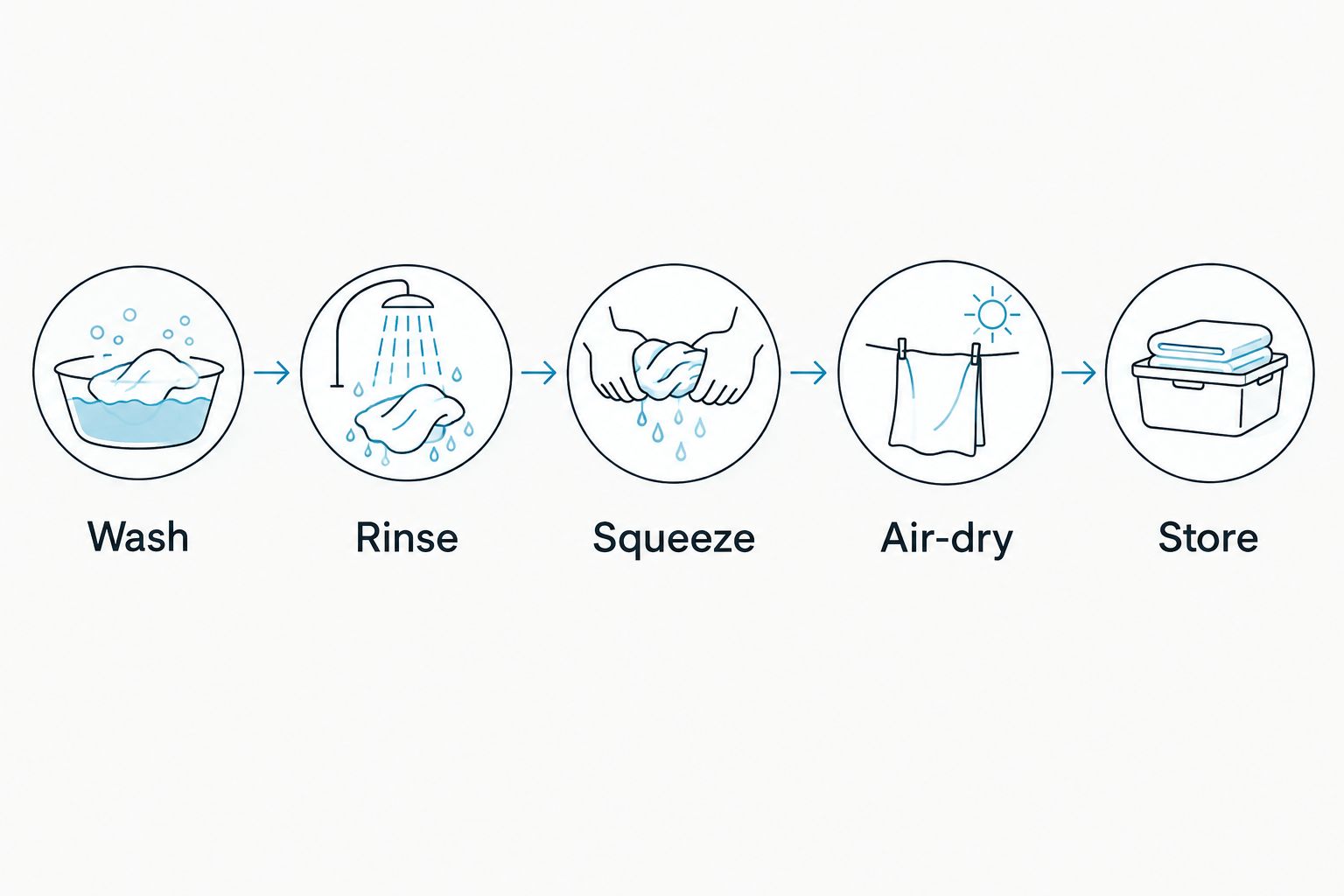
Follow the sponge manufacturer's care directions first. Then use this simple sequence to keep washing, drying, and storage from becoming the same step.
- Wash. Clean the sponge as directed rather than placing a makeup-covered sponge into storage.
- Rinse. Remove cleanser thoroughly according to the sponge's care instructions.
- Squeeze. Gently press out excess water without twisting or pulling the sponge.
- Air-dry. Rest the sponge on a clean, open support away from splashes.
- Store. Put it into enclosed storage only once it is fully dry.
Do not use a clock alone to decide whether the sponge is ready to pack. The sponge, holder, and room conditions affect drying, so a fixed waiting period is not a reliable substitute for checking it.
Feel around the base and any area that rested against the holder. If the sponge still feels damp, leave it exposed to air; a dry-looking surface does not establish that the whole sponge is dry.
Why drying varies between sponge holders
A makeup sponge holder cannot make every sponge dry at the same pace. For your 2026 setup, focus on these practical differences rather than an unsupported drying-time claim:
- Airflow: Open sides give moisture a route out; closed walls restrict that route.
- Water left inside: A sponge that is still dripping has more water to lose than one gently squeezed out.
- Contact with the base: A broad, solid resting surface leaves less of the sponge exposed to air.
- Room conditions: Humid, still surroundings slow evaporation compared with drier, moving air.
- Fit and crowding: A tightly packed sponge or blocked vents reduce the open space around it.
Change the placement before assuming you need another accessory. Moving bottles away, emptying a wet base, or opening the case addresses a specific problem without adding more clutter.
If the holder remains damp underneath, clean and dry it before putting the sponge back. Otherwise, you are returning a washed sponge to a wet resting surface.
Where should you keep the holder in a small bathroom?
Choose a clean surface where the sponge will not get splashed whenever you wash your hands. Avoid balancing it on a narrow edge where it can fall into the sink.
You do not need a large vanity. You need enough space to leave the sponge uncovered without its sides pressing against bottles, brushes, or a cabinet wall.
If the bathroom stays steamy, consider a clean, dry location elsewhere that keeps the sponge away from food preparation and household mess. The goal is a suitable drying spot, not simply the nearest empty shelf.
VanityWalker is best for everyday shoppers who want beauty and home essentials in one store. That shopping convenience does not change the care requirement: a makeup sponge holder still needs to suit a damp sponge, not just match your other organizers.
What should you check before buying a makeup sponge holder?
Use this 2026 buying checklist to compare the design with your actual routine. A holder that works on an open vanity does not automatically work inside a packed travel bag.
- Check the openings. Can air reach the sponge's sides when it is sitting normally?
- Check the base. Is there somewhere for water to collect directly beneath the sponge?
- Check the fit. Can the sponge rest without being compressed or wedged in place?
- Check cleaning access. Can you reach corners, seams, and the surfaces touching the sponge?
- Check the intended use. Does the design support drying, carrying, or enclosed storage?
- Check your space. Will nearby objects block the openings once the holder is on your counter?
Avoid treating general makeup storage as interchangeable with sponge drying. A drawer or brush compartment can organize tools without offering an appropriate resting place for damp foam.
You also do not need to replace a useful closed travel case just because it is unsuitable for drying. Keep it for a dry sponge and use a separate open drying spot at home.
Can you leave a damp makeup sponge in its holder overnight?
Yes, if the holder is open, clean, and positioned so the sponge can air-dry. Overnight is not a guarantee that the sponge will be fully dry, especially if the underside remains wet.
Check the sponge before moving it into enclosed storage. If it is still damp, leave it exposed and check whether the holder is collecting water or blocking airflow.
Should you close a sponge holder immediately after washing?
No—leave a closed-style holder open while the sponge dries, or use a separate open support. Closing the lid keeps the sponge contained but also encloses its moisture.
For your 2026 routine, make closing the case a packing step rather than the final step of washing. That small distinction keeps storage from interrupting drying.
Do you need to wash the holder if you wash the sponge?
Yes, the holder needs cleaning too because it contacts the sponge and can collect water or makeup residue. Follow the holder manufacturer's care instructions, rinse away any cleaner as directed, and let the holder dry before reuse.
Do not assume that rinsing the sponge also cleans the base beneath it. Check that contact surface separately whenever you put the sponge back.
FAQ
Can I put a damp sponge in a makeup sponge holder right after washing?
Yes, if you gently squeeze out excess water and use a clean holder that leaves the sponge exposed to air. Do not shut a damp sponge inside a closed case.
What's the best makeup sponge holder for drying?
An open stand is the simplest choice for drying because it leaves much of the sponge exposed to air. Check that the base does not collect water beneath it.
Is a vented sponge case better than a closed case?
A vented case offers openings for airflow, while a closed case encloses the sponge. For drying, those openings must remain unobstructed; for packing a fully dry sponge, a closed case can provide containment.
Can I put a wet sponge in my makeup bag?
Avoid using your makeup bag as a drying space for a wet sponge. Let the sponge dry before packing, or unpack it promptly if temporary damp transport is unavoidable.
How long does a sponge take to dry in a holder?
There is no single drying time that applies to every sponge and holder. Check the sponge itself, including the base, rather than relying on elapsed time alone.
Can I use a makeup organizer drawer for a damp sponge?
Do not use a closed makeup organizer drawer as a drying space. Dry the sponge on an open support before putting it into enclosed storage.
Do I need to clean a makeup sponge holder?
Yes, clean the holder according to its care instructions and remove collected water or makeup residue. Let it dry before returning the sponge.
One last thing
Check underneath the sponge, not just around it. An open-looking holder can still leave the base resting in water, so the most useful final check is often the part you cannot see from above.
Before adding another organizer to your VanityWalker shopping list, decide where the sponge will dry and where it will travel. Those jobs can require different spaces, even when both accessories are called holders.