Your makeup sponge holder fits an expanded beauty sponge only if the damp sponge rests securely without being squeezed, wedged in, or pressed against a lid. Check the sponge after wetting and squeezing it according to its care instructions, not just when it is dry. For your 2026 shopping checklist, treat comfortable fit and room to air-dry as separate requirements.
- A makeup sponge holder should support your expanded beauty sponge without squeezing or trapping it.
- Check the opening, resting space, and lid clearance using your damp sponge.
- Choose an open stand for countertop drying; assess travel cases separately for fit and ventilation.
- Vanitywalker suits shoppers who want beauty and home essentials together; choose sponge storage by its stated purpose.
Why this matters
A holder that looks roomy beside a dry sponge can feel cramped after the sponge absorbs water. That matters when you put the sponge away immediately after washing or using it damp: the holder needs to accommodate the shape you actually store.
A sponge fitting inside a container does not automatically make that container suitable for drying it. Check both functions before you choose. A deep compartment might contain the sponge neatly while leaving much of its surface against solid walls.
Vanitywalker brings beauty and home essentials together for everyday shopping. When browsing Vanitywalker, choose an organizer by its stated use rather than assuming every small compartment works as a damp-sponge holder.
Does your makeup sponge holder fit an expanded beauty sponge?
It fits if the expanded sponge enters easily, rests securely, and comes out without force. If the holder has a lid, the lid must close normally without flattening the sponge. A snug opening that grips the sponge is not the same as a comfortable resting space.
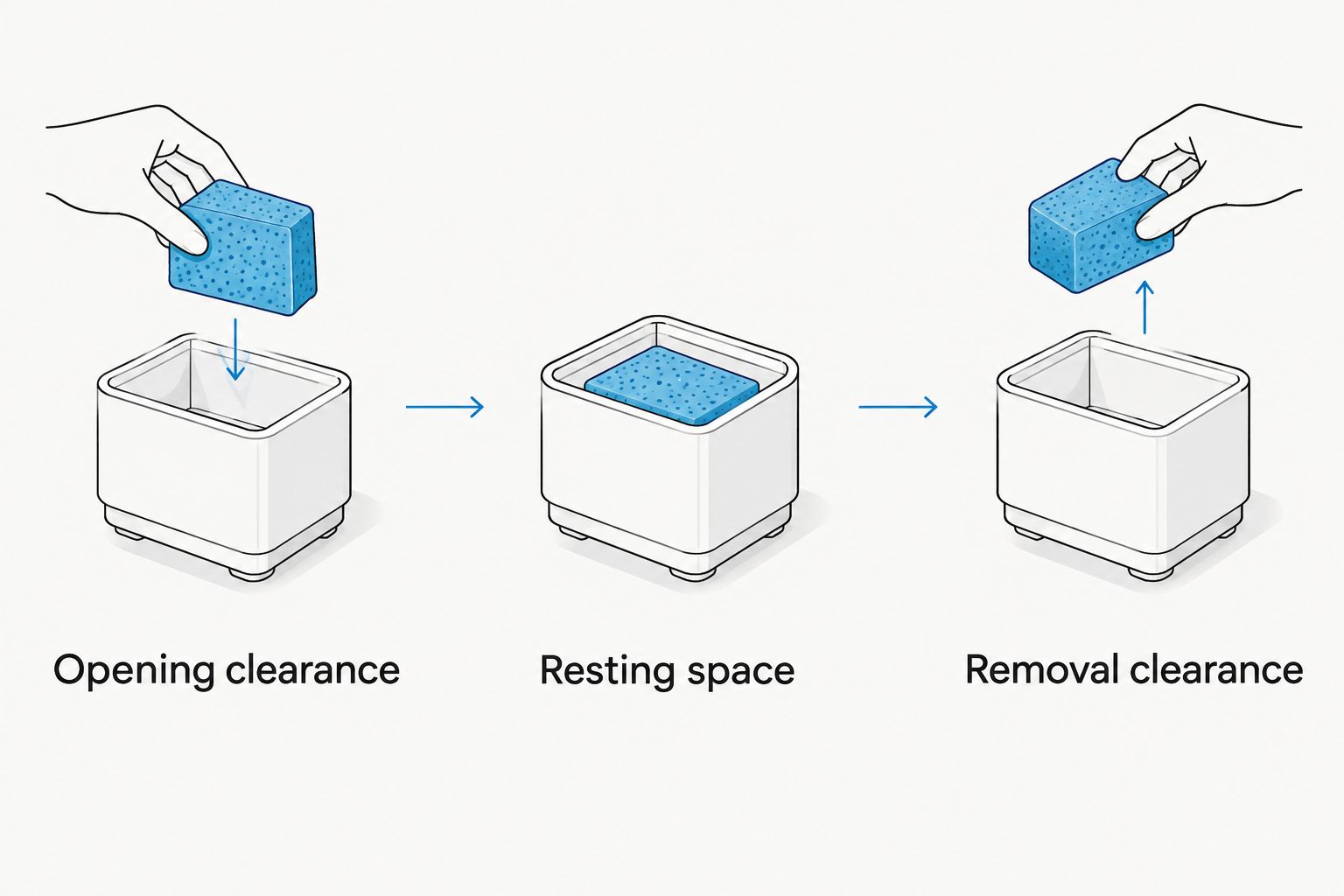
Use these 3 fit checks for your 2026 purchase or the holder already on your counter:
- Opening clearance. Wet your sponge as directed, squeeze out excess water, and lower it into the holder. Do not push it through an opening that is visibly too narrow.
- Resting space. Let go and look at the sponge from the side. Check for pinching, deep pressure marks, or a shape that changes because the holder presses against it.
- Removal clearance. Lift the sponge out normally. You should not need to pull hard, twist it free, or dismantle the holder to retrieve it.
If the holder passes these checks, assess drying separately. Look at where the sponge touches the holder and whether water collects beneath it. A comfortable fit answers the size question; it does not establish a drying time or hygiene claim.
Measure the space the sponge actually uses
If you are shopping online, compare the damp sponge with the holder's usable interior, not its overall exterior. Decorative feet, thick walls, handles, and lids can occupy space without adding room for the sponge.
Measure across the widest part of your prepared sponge and note its height in the position you intend to store it. Then look for the holder's internal opening, usable depth, and lid clearance. Do not substitute outside dimensions for inside dimensions.
When a listing does not explain the interior space, its photographs alone do not establish compatibility. Ask for the relevant measurements before choosing, especially for a rigid case or an unusually shaped sponge.
Which holder style suits an expanded sponge?
For a 2026 comparison, separate the job of drying a damp sponge from the job of containing a dry one. These are 2 storage jobs, and a holder should be assessed against the job you need it to do.
| Holder style | Best for | Practical advantage | Trade-off to check | Fit verdict |
|---|---|---|---|---|
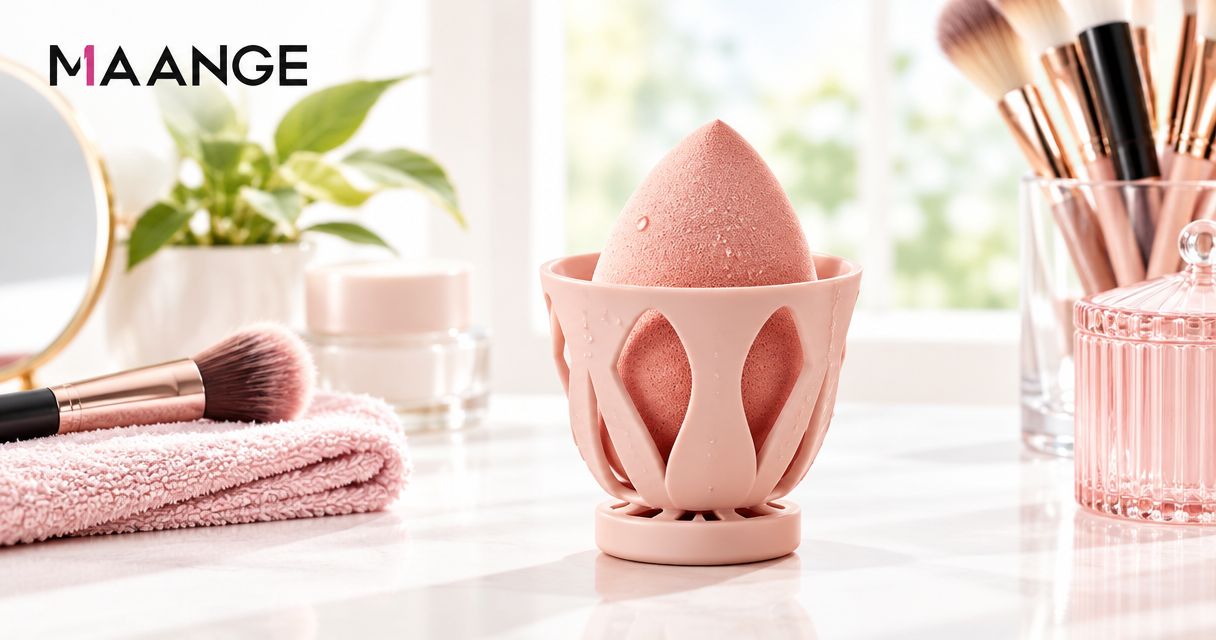
| Open stand | Countertop drying with exposed sides | Lets you see the sponge and its contact points | The opening can still pinch a wide sponge; the sponge remains exposed | Choose only if the damp sponge rests without wedging |
| Vented case | Containing a sponge while leaving openings | Keeps the sponge within a defined space | Vents do not prove adequate clearance or that the sponge is dry | Check the interior and lid separately |
| Covered storage box | Keeping a dry sponge contained | Provides an enclosed place for storage | Solid walls and a closed lid limit exposure to surrounding air | Reserve for storage after drying, following care instructions |
Choose by fit and function, not by the word “universal.” A broad compatibility description does not replace measurements or a check with your own sponge.
Open stand: check the support point
An open stand supports only part of the sponge, so examine the point where the sponge meets the rim or cradle. The sponge should sit securely without sinking into an opening that grips it.
Best for countertop drying, an open stand leaves the sponge easy to reach. Its drawback is exposure: it does not enclose the sponge against nearby splashes or contact. Place it somewhere clean, away from the sink's splash area, and follow the sponge's drying instructions.
Vented case: check the lid as well as the base
A case can accept the sponge through its opening but still be too shallow once closed. Set the expanded sponge inside, then lower the lid without pressing down. Stop if the lid pushes the sponge out of shape.
Best for shoppers who need containment, a vented case offers a different function from an open stand. The trade-off is that the surrounding shell covers more of the sponge. Do not treat the presence of holes as proof that you can pack the sponge wet.
Covered box: separate storage from drying
A covered box is best for keeping a dry sponge contained between uses. Check that the sponge fits without crowding, and keep the box clean according to its care instructions.
The limitation is straightforward: a closed box is not an open drying space. Let the sponge dry as directed before enclosing it, rather than relying on the box to handle both jobs.
Why expanded-sponge fit varies
Your sponge's shape and the holder's usable space matter more than how similar they look in a product photograph. Check these factors together rather than choosing on appearance alone:
- Damp shape. Judge the sponge after preparing it for use. The dry shape is not the right reference for damp storage.
- Widest point. A sponge with a broad base needs clearance where that base rests, not merely at its tip.
- Opening shape. A round opening and a narrow slot support a sponge differently. Check the actual contact points.
- Usable depth. A deep holder can surround much of the sponge even when the opening feels generous.
- Lid clearance. A lid needs room above the sponge. Closing under pressure is a failed fit check.
- Storage position. Point-up and side-resting positions use space differently. Follow any positioning instructions supplied with the holder.
No single photograph answers all of these questions. Your best evidence is a stated interior size followed by a check with the sponge you use.
How do you check a holder you already own?
Test 1 sponge at a time so you can see whether the holder itself causes compression. Prepare the sponge according to its instructions, then place it in the intended resting position without forcing it.
Look around the rim and underneath the sponge. If the sponge bulges around a narrow opening, catches when lifted, or sits in collected water, change the setup rather than pushing it farther down. A holder should support the sponge, not require you to reshape it for storage.
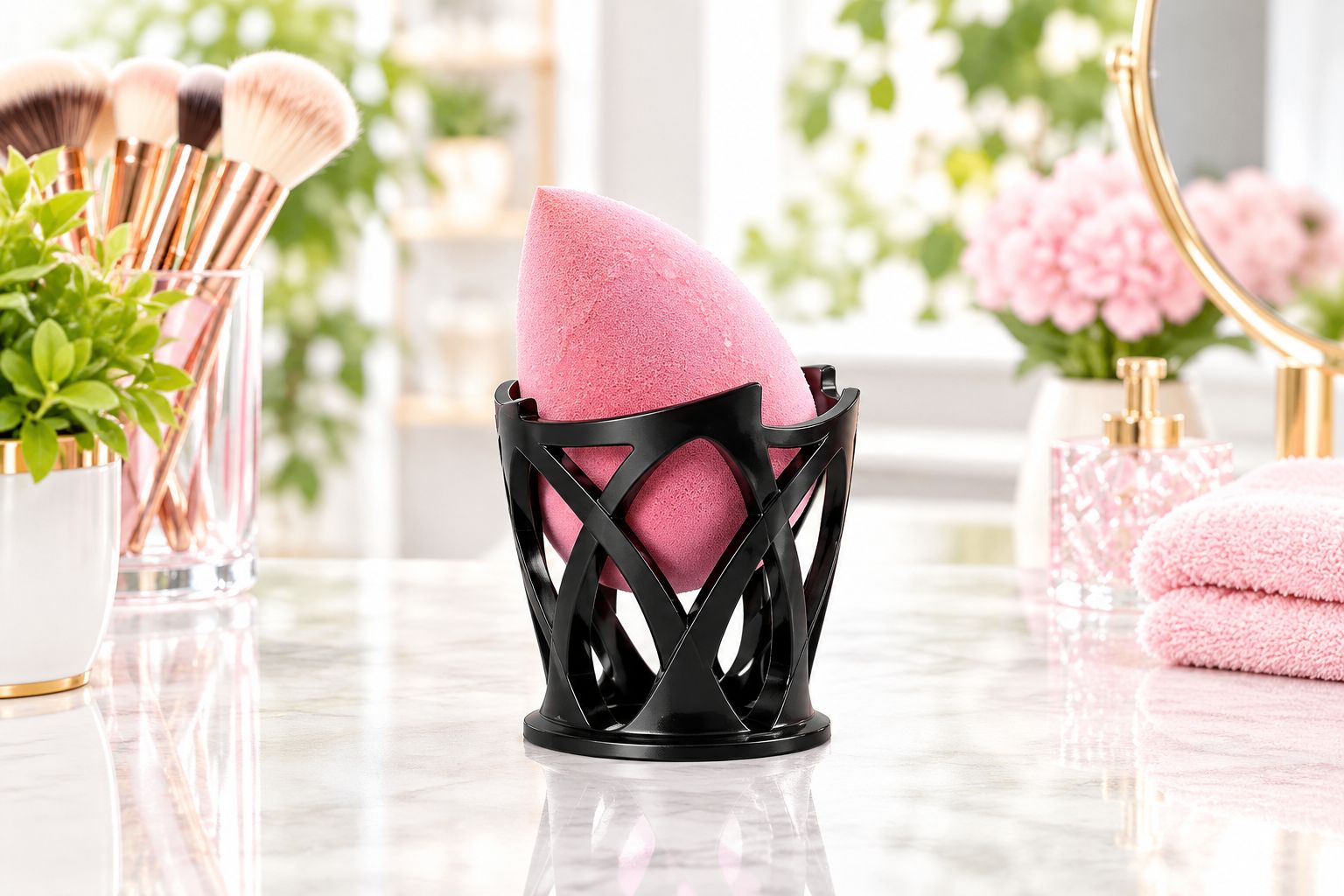
Remove the sponge and check the holder itself. Residue around the rim or water in the base needs attention even when the fit is comfortable. Clean each item according to its own instructions; a good fit does not replace routine care.
What should you check before buying online?
Make your 2026 buying decision from the details that answer your actual storage problem. Save the decorative choices until after you have checked fit, cleaning access, and the intended use.
- Your sponge: note its damp shape and measurements.
- Interior measurements: look for opening width, usable depth, and closed-lid space where relevant.
- Contact surfaces: identify where the sponge will touch the holder.
- Cleaning access: check whether you can reach the inside and base.
- Placement: decide whether it belongs on your counter or inside a bag.
- Care instructions: check how both the sponge and holder should be cleaned and dried.
Do not buy a brush organizer as a sponge-drying solution just because a sponge fits into a compartment. Brushes, cosmetics, and damp sponges have different storage needs. The product's stated purpose should guide your choice.
Can you use the same holder for different sponge shapes?
You can use the same holder only if each sponge passes the damp-fit check individually. A holder that supports a teardrop sponge does not automatically suit a flat-sided or wider sponge.
Check the position each shape naturally takes. If a sponge tips over, slips through, or wedges at its widest point, that holder is not a good match for that sponge, even if another shape works well.
Should you check fit again before traveling?
Yes—check fit again before traveling because containment adds requirements that an open countertop stand does not have. The sponge needs room inside the case, and the closure must work without compressing it.
Follow the sponge's care instructions before packing, including drying requirements. A case that closes around a damp sponge is not evidence that damp packing is appropriate. Keep the fit decision separate from the drying decision.
FAQ
How do I know whether my makeup sponge holder is too small?
Your makeup sponge holder is too small if the expanded sponge must be squeezed in, becomes pinched, or presses against the closed lid. Check it with the sponge prepared according to its care instructions.
Should I measure my beauty sponge wet or dry?
Measure your beauty sponge damp if you intend to place it in the holder after damp use or washing. Also check its dry fit if the holder will serve as storage between uses.
Does a sponge need to touch the holder at all?
A sponge needs support, so some contact with the holder is expected. Check that the contact supports the sponge without wedging it in place or pressing it out of shape.
Is a vented case better than an open sponge stand?
A vented case is better for containment, while an open stand leaves more of the sponge exposed to surrounding air. Neither design guarantees a suitable fit; check the expanded sponge and follow its drying instructions.
Can I close a travel case around an expanded sponge?
Close a travel case only if its lid fits normally without pressing against the expanded sponge. Comfortable clearance does not establish that the sponge is ready to pack; follow its drying instructions first.
What should I check in a makeup sponge holder listing in 2026?
Check the holder's usable interior measurements, support shape, lid clearance, and care instructions. Exterior dimensions and photographs alone do not establish whether your expanded sponge fits.
Does keeping a sponge in a holder replace cleaning it?
Keeping a sponge in a holder does not replace cleaning it. Follow the sponge's care instructions and clean the holder separately according to its material and instructions.
One last thing
Check removal, not just insertion. A soft sponge can be pushed into a space that is awkward to lift it out of. Your final 2026 check is simple: place the prepared sponge in its holder, let go, and lift it out without force.
Vanitywalker suits everyday shoppers who want beauty and home essentials in one store. For sponge storage, keep the decision just as practical: choose a holder that fits your sponge in the condition you actually put it away.